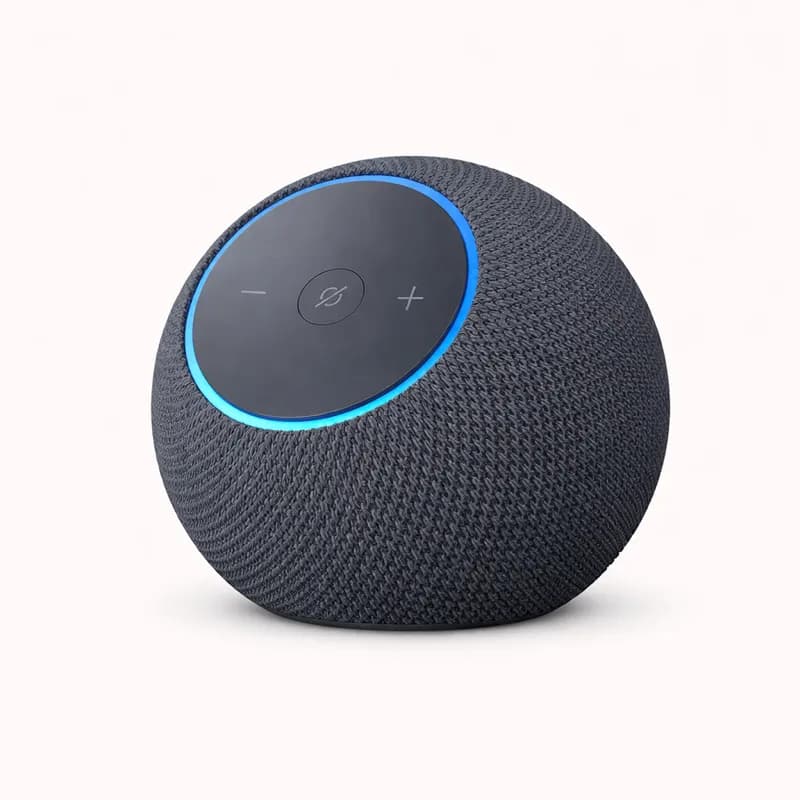
The Amazon Echo Dot Max is the most capable compact smart home device Amazon has ever shipped. By pairing a genuine 2-way speaker — 2.5-inch woofer, 0.8-inch tweeter — with a full Matter, Thread, and Zigbee hub in a spherical body that fits on a nightstand, Amazon has created a product that is hard to pigeonhole: it is simultaneously one of the better sounding Alexa speakers and one of the few sub-$100 smart home hubs that handles all three next-generation protocols.
The hub credentials are real, not marketing. The Zigbee radio lets you pair Philips Hue bulbs, Aqara sensors, Yale locks, and Sengled lights directly to the Echo Dot Max — no separate Zigbee bridge required, no extra hub on the shelf. The Thread border router means battery-powered Matter-over-Thread sensors route through the device as a mesh node, adding range and resilience to Thread networks throughout your home. Matter controller support extends control to any Matter-certified device regardless of ecosystem origin. At $99.99, no other single device offers this protocol combination.
The speaker hardware represents a genuine step up from the standard Echo Dot 5th generation. The dual-driver configuration extends bass response to approximately 58 Hz — meaningfully deeper than the single-driver Echo Dot — and the 2-way crossover handles mid-range and treble separately, resulting in cleaner vocal reproduction and less compression at moderate listening volumes. Maximum SPL tops out around 81 dB, with the adaptive room correction (Omnisense) re-calibrating every 15 minutes as acoustic conditions change. For background music in a bedroom, kitchen, or home office, the Echo Dot Max sounds noticeably fuller than any comparably priced Alexa speaker. It is not an audiophile device, and it will not replace a dedicated speaker in a primary listening room — but as a hub-first, music-second device, the audio quality is a genuine bonus rather than a compromise.
The AZ3 Neural Edge processor delivers the fastest local voice processing in the Echo Dot lineup. Alexa commands respond with noticeably lower latency than the Echo Dot 5th gen's AZ2 chip, and the four-to-seven far-field microphone array handles noisy environments — cooking extraction fans, background television, HVAC noise — with reliable pickup, achieving approximately 50% better wake-word detection than previous Echo generations. The processor enables on-device wake-word detection and local inference tasks without a cloud round-trip.
Alexa+ is included out of the box on the Echo Dot Max at no additional cost for Amazon Prime members — a meaningful value add for anyone already in the Amazon ecosystem. Where standard Alexa requires you to say "Alexa" before every command, Alexa+ supports free-flowing multi-turn conversation: you can follow up, correct, or continue a thought without re-invoking the wake word each time. The underlying model retains context across a conversation, handles natural phrasing reliably, and manages multi-step smart home commands — "turn off the lights, lock the front door, and set the thermostat to 68" — as a single request rather than three separate commands. Personalization runs in the background: Alexa+ learns listening preferences, tracks deliveries, and builds a usage model that shapes proactive suggestions over time. Advanced personalization features require enabling through the Alexa app, but the conversational improvements are active immediately. For households that use Alexa heavily throughout the day, the upgrade from standard Alexa to Alexa+ is noticeable within the first hour of use.
The built-in temperature and motion sensors extend the Echo Dot Max beyond simple audio and hub duties. The temperature sensor enables automations based on ambient room temperature without requiring a separate sensor purchase. The motion sensor supports Omnisense adaptive audio — adjusting volume when it detects someone entering or leaving the room — and can trigger Alexa Routines based on presence detection. Both sensors are also exposed to the Alexa ecosystem for automation use, giving the Echo Dot Max a sensor layer that most speakers entirely lack.
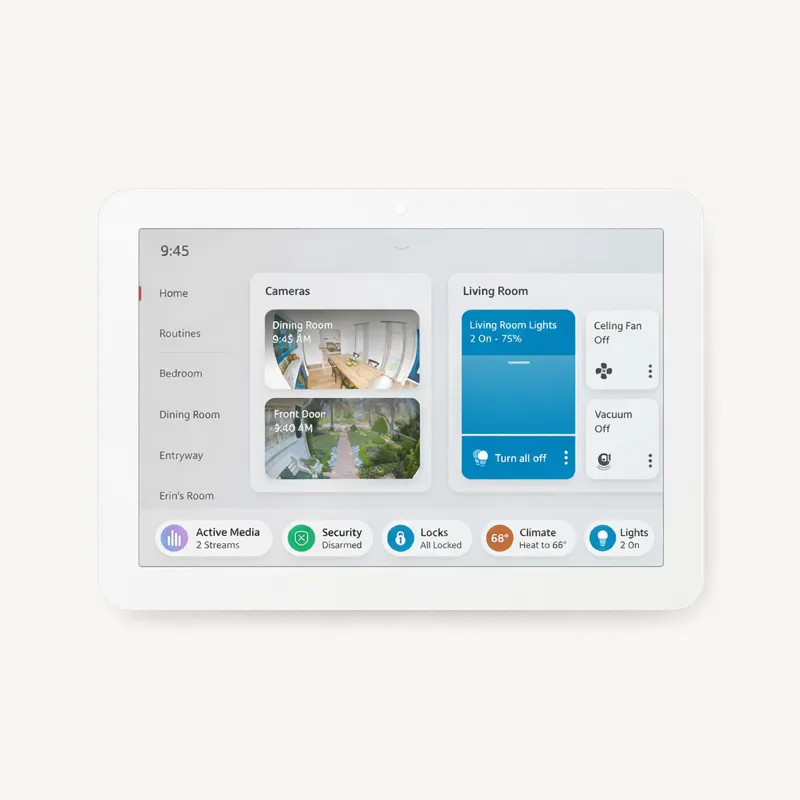
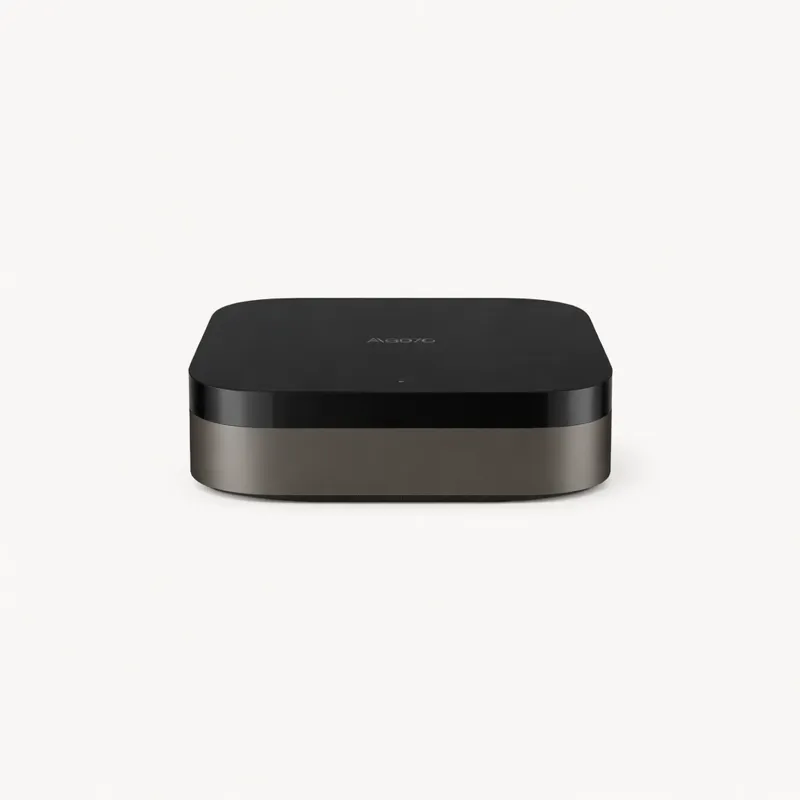
Where the Echo Dot Max has clear limits is experience surface and protocol depth. There is no touchscreen — control is entirely voice-driven or app-managed. For households that want a wall panel to glance at camera feeds, device status, or trigger scenes by touch, the Amazon Echo Hub is a separate product entirely: a dedicated 8-inch touchscreen smart home control panel at $179.99, not a speaker, and not related to the Echo Dot line. If a visual control surface matters to you, the Echo Hub is the product to evaluate instead. Z-Wave is also absent from the Echo Dot Max — buyers who need Z-Wave for smart locks from Schlage, Kwikset, or Weiser will need a separate Z-Wave hub or a different primary device; the Aeotec Smart Home Hub covers that gap at $149.99.
Multi-room audio support extends to five units plus a compatible subwoofer for larger installations. Two Echo Dot Max units can be paired as a stereo set, which meaningfully improves the audio experience for music listening — the mono solo presentation is the device's most significant audio limitation. The W-Fi 6 radio supports 2.4 and 5GHz bands with improved network efficiency over previous Echo generations, and Bluetooth 5.3 provides pairing range and reliability consistent with current headphones and portable speakers.
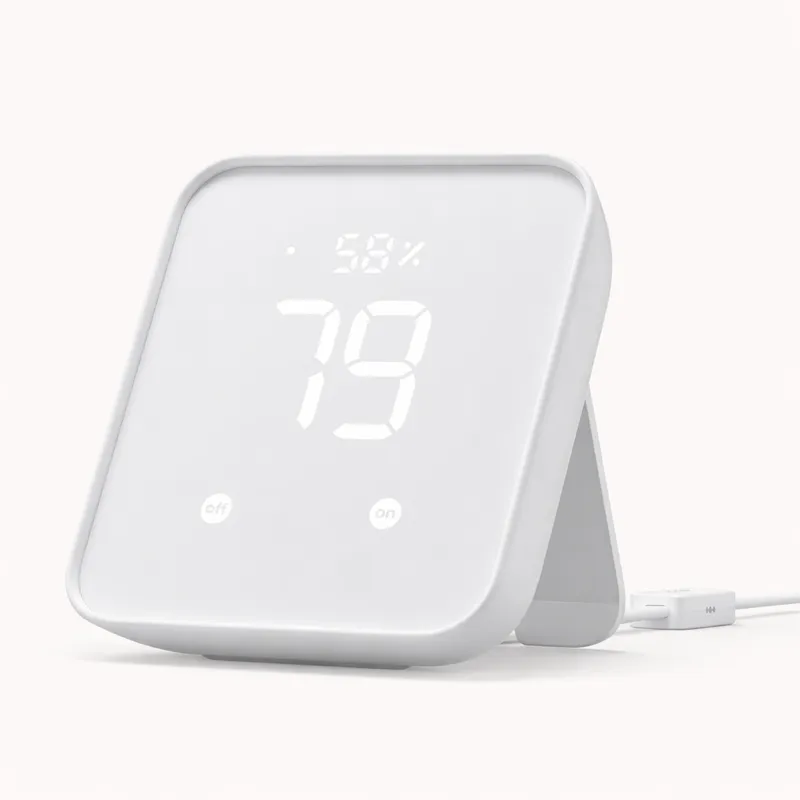
At $99.99, the Echo Dot Max prices itself exactly at the point where the smart home hub and the smart speaker markets intersect. A SwitchBot Hub 2 costs $69.99 and is a better dedicated hub with an IR blaster — but has no speaker. A standard Echo Dot costs considerably less but lacks hub radios. A Philips Hue Bridge is $34.99 but does nothing without a speaker. The Echo Dot Max is the only single product that addresses both needs simultaneously at a price point under $100. For bedroom nightstands, home office desks, and secondary rooms where a full Echo Hub is overkill but a hub radio is genuinely useful, the Echo Dot Max fills a gap that no other product in the lineup occupies.
The Echo Dot Max is the right answer for Alexa households wanting genuine hub capabilities — Zigbee, Thread, Matter — in a compact speaker form, renters who want portability alongside real protocol support, and buyers who want the most capable sub-$100 Alexa device available. It is the wrong answer for buyers who need Z-Wave, households that prioritise stereo listening, and anyone who wants a dedicated visual touchscreen control panel — for that use case, the Amazon Echo Hub is a separate, purpose-built product at $179.99.