HomeControlHub

Sector guide

Best Smart Plugs
& Energy Monitors

Updated March 2026HomeControlHub editorial team

From Matter smart plugs to whole-home energy monitors — everything you need to control every outlet, track every watt, and cut your electricity bill with the right hardware.

Smart home energy monitoring dashboard showing real-time power consumption

Not sure which setup is right for you?

Answer 8 questions and get a personalized smart home plan with cost estimate and installation roadmap.

Build my plan →

The best smart plug

Kasa KP125M Matter Smart Plug

9.1/ 10

$39.99 · Best Matter Smart Plug

Bottom line

Matter-native energy monitoring in a compact plug that works with Alexa, Google, Apple, and SmartThings out of the box — no hub required, no bridge, no setup headaches.

The Kasa KP125M is the new standard for Matter smart plugs: compact, reliable, genuinely cross-ecosystem, and priced low enough to deploy in every room without hesitation.

The Kasa KP125M sets the new benchmark for consumer Matter smart plugs. Its Matter certification means it works natively with Alexa, Google Home, Apple HomeKit, and Samsung SmartThings simultaneously — pair it once and control it from any ecosystem. No bridge required, no manufacturer cloud account needed for cross-platform operation.

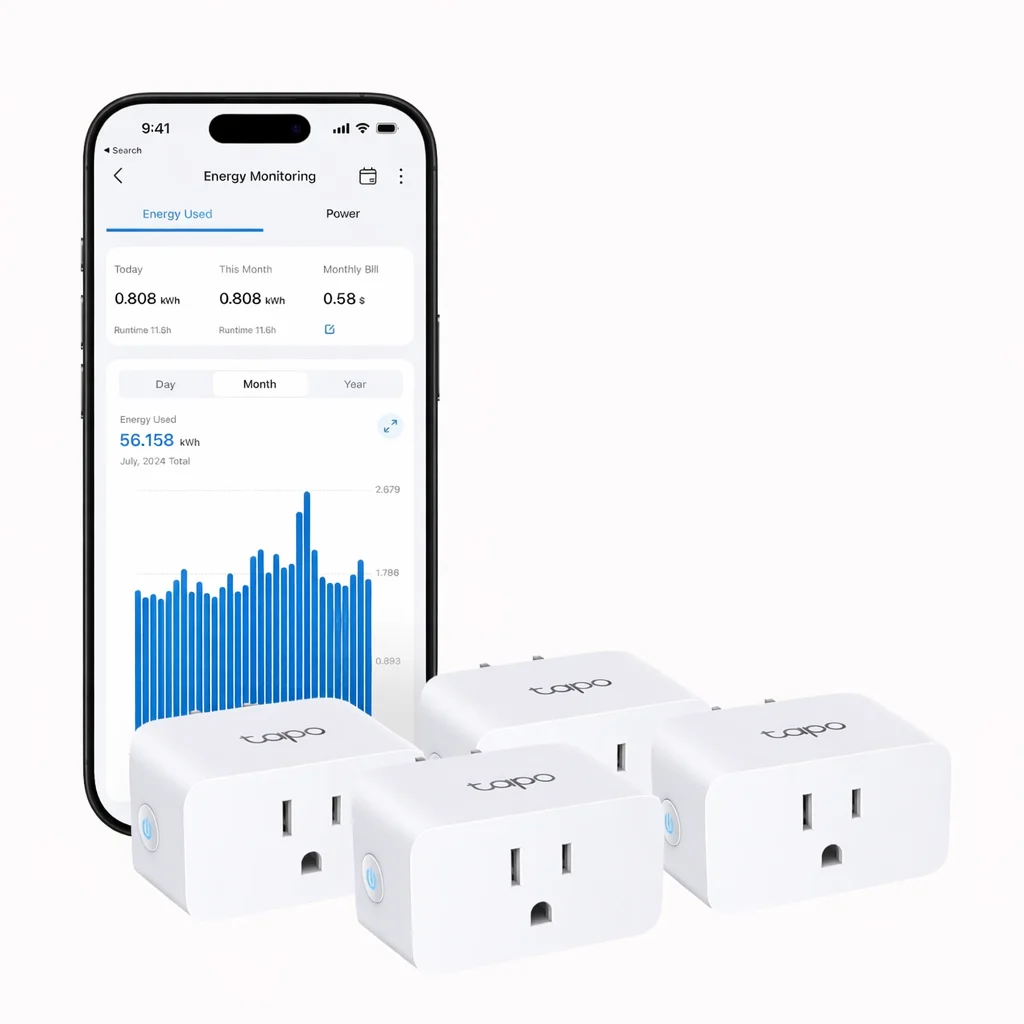
The built-in energy monitoring is the standout feature at this price point. Real-time wattage readings and cumulative kWh tracking land directly in the Kasa app and any connected Matter controller. You can see exactly how much power your TV, space heater, or washing machine is drawing, set schedules based on usage patterns, and identify phantom load from devices left on standby.

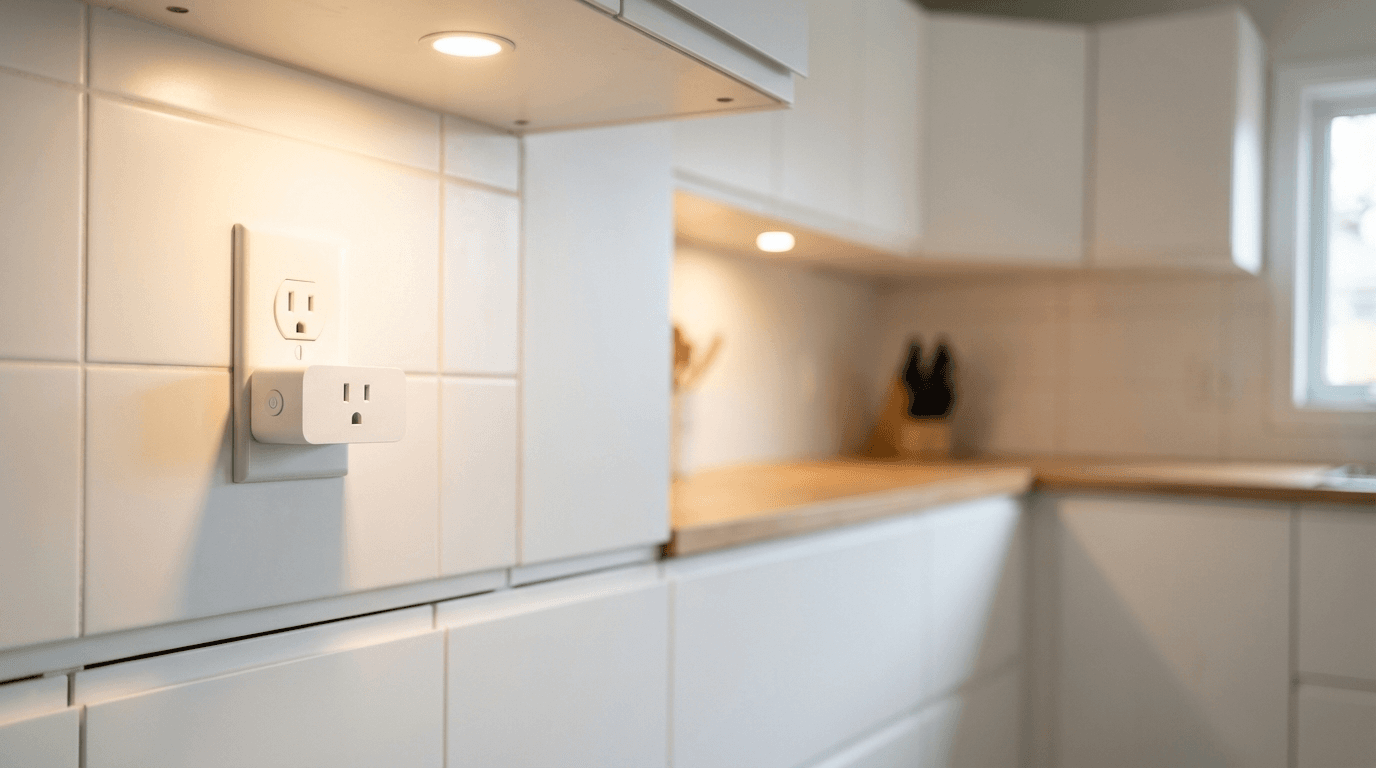
The compact design is a genuine advantage in tight outlet configurations — the KP125M does not block adjacent outlets, a frustrating limitation of many competing plugs. Matter LAN control means automations run locally even when your internet goes down. At $10 per plug in a 4-pack, it is the most cost-effective way to add smart control and energy monitoring to every circuit in your home.
Pros

  • Matter-certified: works with Alexa, Google, HomeKit, and SmartThings simultaneously
  • Built-in energy monitoring — real-time wattage and cumulative kWh
  • Compact design does not block adjacent outlets
  • Local Matter control stays active even when internet goes down
  • No hub or bridge required for setup

Cons

  • Wi-Fi only — no Thread or Zigbee radio for local mesh operation
  • Energy data history limited in the Kasa app without an account
  • Outdoor model (EP40) sold separately for weatherproof applications
Kasa KP125M Matter Smart Plug specifications
ConnectivityWi-Fi (2.4GHz), Matter
Voice AssistantsAlexa, Google Home, Apple HomeKit, SmartThings
Energy MonitoringYes — real-time watts + kWh history
Hub RequiredNo — works standalone via Matter
Monthly FeeNone
Back to top
Kasa KP125M Matter Smart Plug
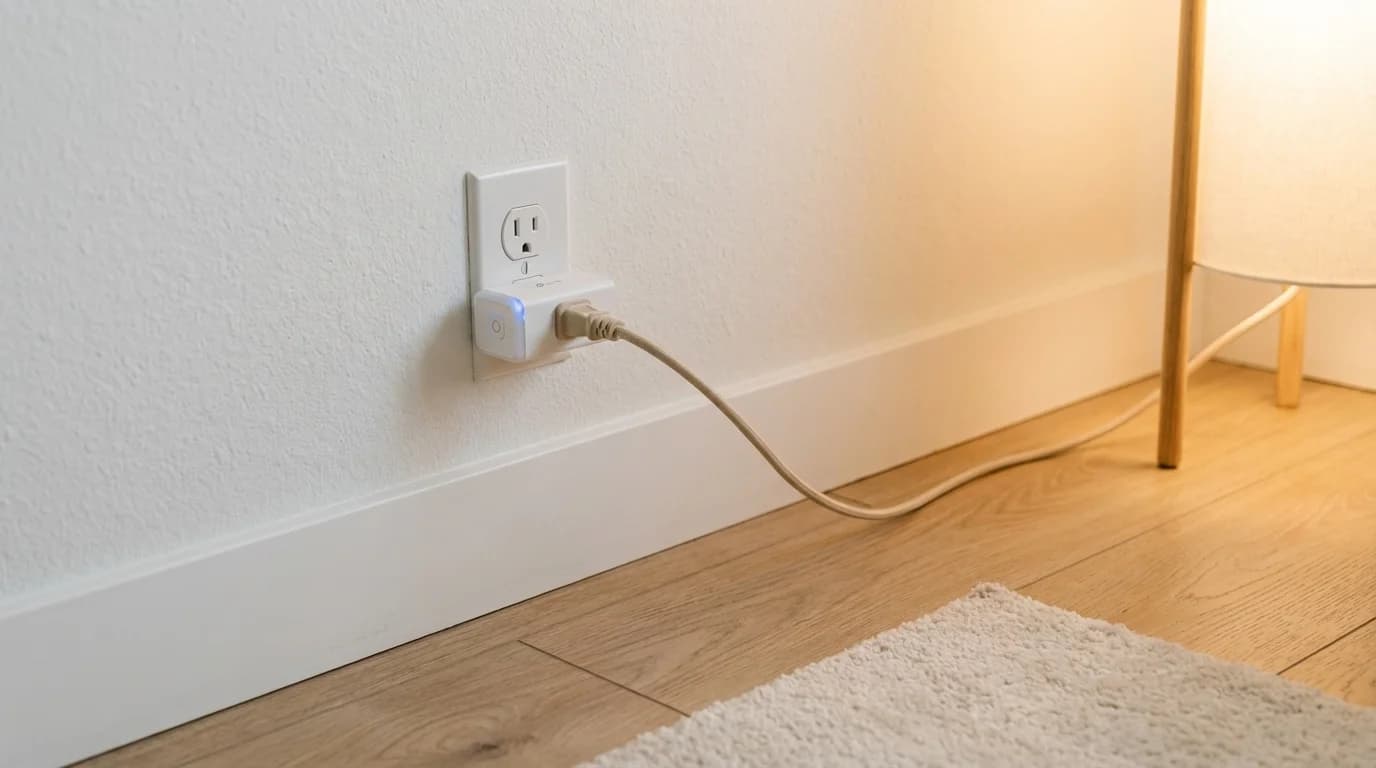
Kasa KP125M Matter Smart Plug in a smart home setting
Emporia Vue 3 Whole-Home Energy Monitor
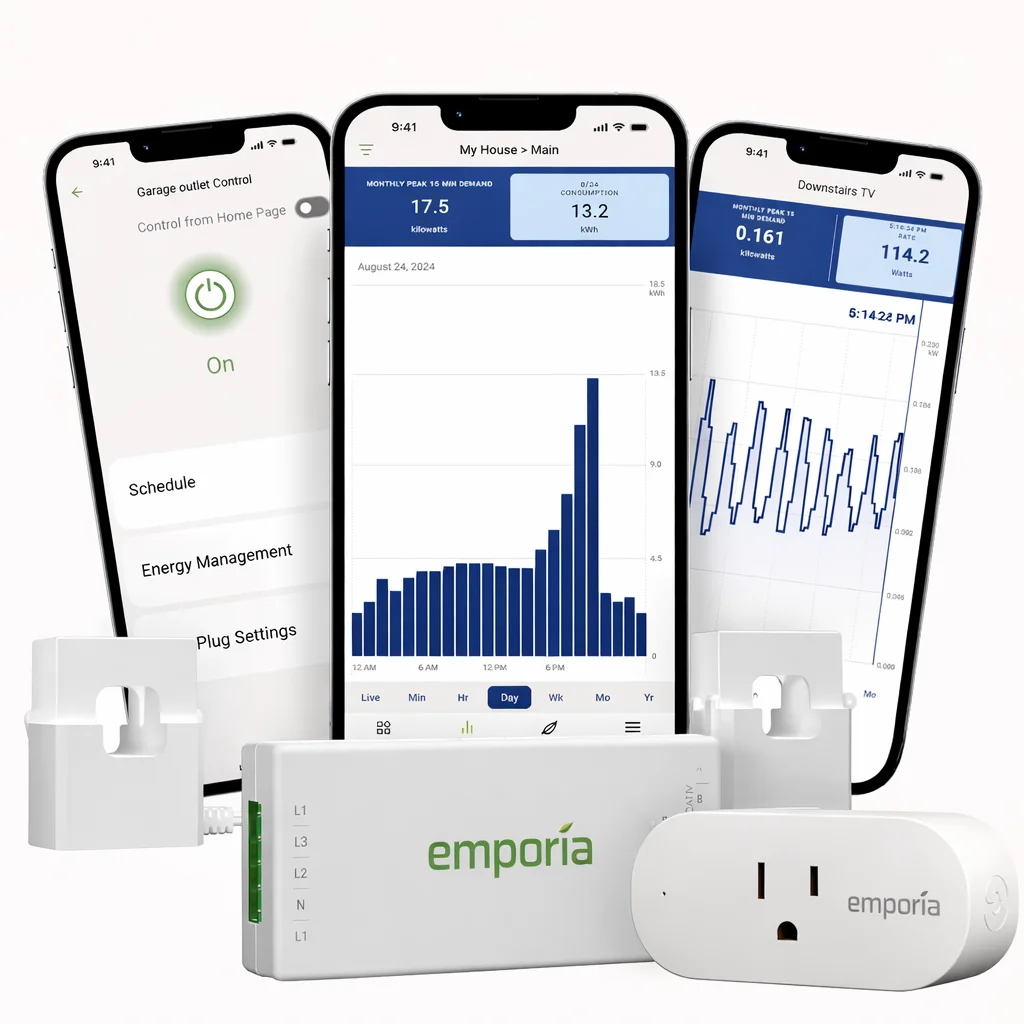
Emporia Vue 3 Whole-Home Energy Monitor in a smart home setting

Whole-home energy monitoring

Emporia Vue 3 Whole-Home Energy Monitor

8.7/ 10

$99.99 · Best Whole-Home Energy Monitor

Bottom line

The only mainstream whole-home energy monitor that shows circuit-level consumption in real time — the essential upgrade before investing in EV charging, solar, or serious energy reduction.

Where smart plugs monitor individual outlets, the Emporia Vue 3 monitors your entire home — every circuit simultaneously, from the panel out. It is a fundamentally different class of device, and for homeowners serious about energy management, nothing else comes close.

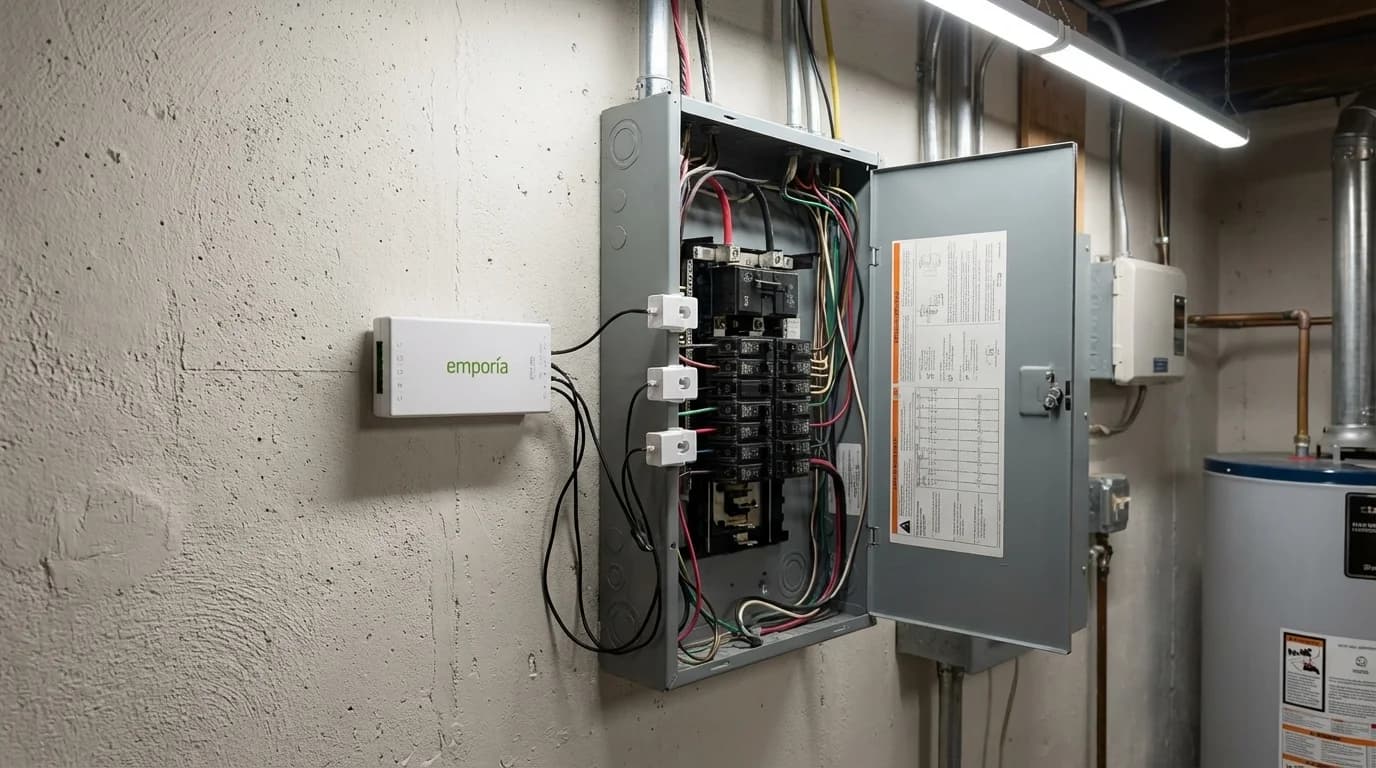
The Emporia Vue 3 installs directly at your electrical panel, clipping current transformers (CTs) around each individual circuit breaker wire. The result is a real-time dashboard showing power consumption for every circuit in your home — kitchen, HVAC, EV charger, washing machine — updated every second without any device-level instrumentation.

The granularity is remarkable. Emporia users report immediately identifying unexpected energy hogs: a second refrigerator consuming $20/month they had forgotten, an old dehumidifier drawing 800W continuously, or an EV charger pulling more than the electrician had estimated. The average Emporia Vue 3 user reduces their electricity bill by 8–15% in the first month simply by becoming aware of consumption patterns they had no visibility into before.

Home Assistant integration via the Emporia integration or HACS connects the Vue 3 to the Energy Dashboard, enabling whole-home energy tracking alongside solar generation and grid export data. For households with solar panels, an EV charger, or time-of-use electricity pricing, the Emporia Vue 3 provides the data layer that makes intelligent automation possible. Professional installation is recommended for the panel-level CT sensor installation.

Pros

  • Circuit-level monitoring for every breaker in your panel simultaneously
  • Real-time updates every second — not averaged over 15-minute intervals
  • Home Assistant native integration for Energy Dashboard
  • Solar generation and EV charger monitoring supported
  • 8–15% average bill reduction reported by users in first month

Cons

  • Requires access to electrical panel — professional installation recommended
  • Wi-Fi only (2.4GHz) — no wired Ethernet fallback on base model
  • Full circuit monitoring requires purchasing additional CT sensor packs
Emporia Vue 3 Whole-Home Energy Monitor specifications
ConnectivityWi-Fi (2.4GHz)
Monitoring ScopeWhole-home + individual circuits (up to 16 sensors)
Update FrequencyReal-time (1-second resolution)
Hub IntegrationHome Assistant, standalone Emporia app
Monthly FeeNone
Back to top

Multi-protocol picks

Best General Hubs for Energy Management

Need a hub that ties together smart plugs, energy monitoring, and the rest of your smart home? These all-rounders handle Zigbee energy sensors, Matter plugs, and advanced automations in a single platform.

Amazon Echo Hub
Best Overall

Amazon Echo Hub

Amazon

$179.99

The best all-round hub for Alexa households — easy setup, broad compatibility, and a genuinely useful 8" touchscreen.

rentersalexa

Pros

  • Built-in Zigbee and Matter radio — no separate hub needed
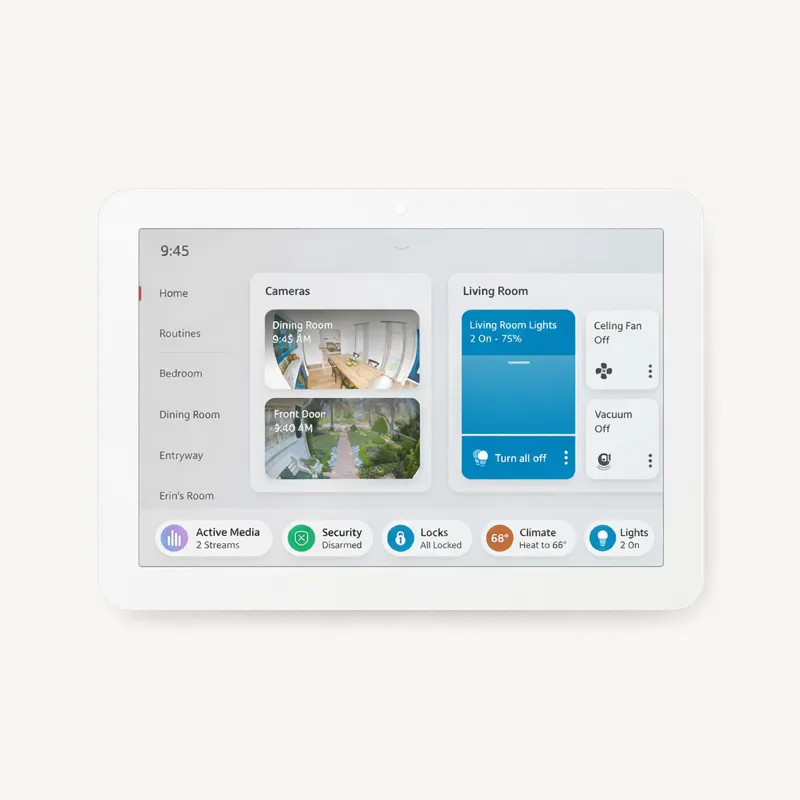
  • 8" touchscreen dashboard shows cameras, routines, and device controls
  • Works with 100,000+ Alexa-compatible devices

Cons

  • Alexa-only ecosystem — limited Google Home and HomeKit integration
  • Cloud-dependent; loses some features if internet goes down
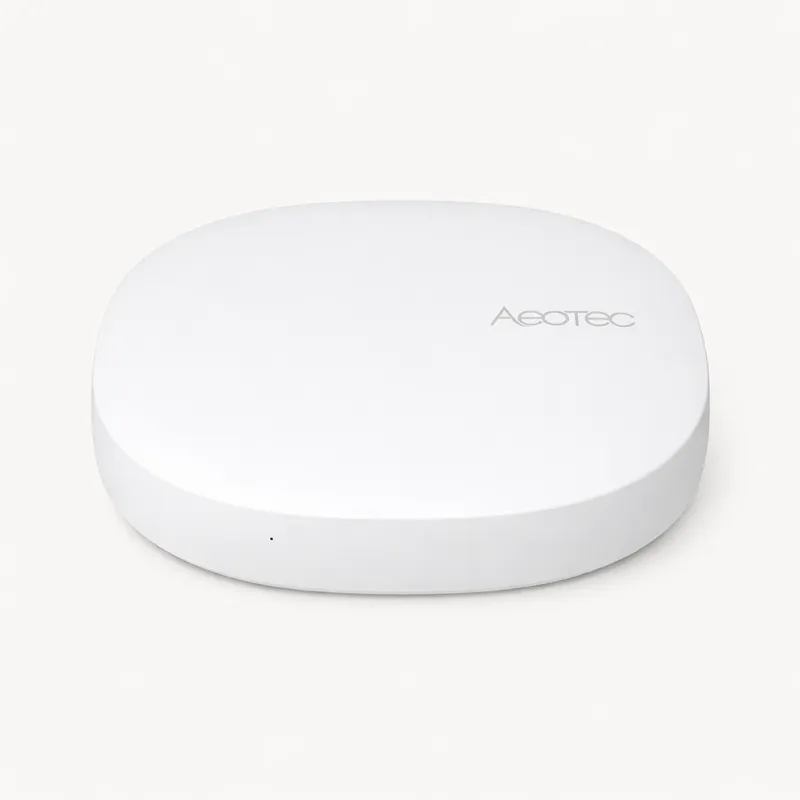
Aeotec Smart Home Hub
Best for Power Users

Aeotec Smart Home Hub

Aeotec

$149.99

The official SmartThings hub replacement — Zigbee, Z-Wave, and Matter in one box, running the same platform Samsung recommends.

power users

Pros

  • Zigbee, Z-Wave, and Matter in one hub — broadest protocol coverage at this price
  • Runs the SmartThings platform — the most powerful smart home app available
  • Local execution for supported devices — automations survive internet outages

Cons

  • No built-in Thread radio (Matter works over Wi-Fi/Ethernet only)
  • SmartThings app is powerful but notoriously complex for new users
Home Assistant Green
Best for DIY

Home Assistant Green

Nabu Casa

$99

The ultimate open-source hub — plug in, run Home Assistant, and integrate virtually every smart home device on the planet. No cloud. No subscription. No limits.

privacypower users

Pros

  • 3,000+ integrations — connects virtually every smart home platform, brand, and protocol
  • Fully local — automations run on-device with no cloud dependency
  • Native Matter controller and growing Thread support via USB radio dongle

Cons

  • No built-in wireless radio — Zigbee, Z-Wave, and Thread each require a separate USB dongle
  • Steep learning curve — YAML configs, developer-oriented UI, and a large feature surface
Homey Pro
Best for Large Homes

Homey Pro

Athom

$399

The most powerful hub on the market — supports every major protocol plus Infrared and 433MHz. Premium price for premium capability.

power usersprivacy

Pros

  • Supports Zigbee, Z-Wave, Thread, Matter, IR, and 433MHz in one device
  • Homey app is the best-designed hub app on the market
  • Full local processing — no cloud dependency

Cons

  • $399 price tag is a significant commitment
  • Overkill for smaller or simpler setups

Home Assistant Green's built-in Energy Dashboard aggregates data from smart plugs, whole-home monitors, and solar inverters into a single view — no other commercial hub offers this depth of energy visibility out of the box.

Complete your setup

Energy Accessories That Pair Well

TP-Link Tapo P110M Mini Smart Plug 4-Pack

MatterEnergy monitoringCompact
Best value Matter plug — 4-pack with energy monitoring

Eve Energy Matter Smart Plug (Thread)

ThreadHomeKitLocal processing
Best Thread-based smart plug for Apple HomeKit

Kasa Smart WiFi Power Strip (3 outlets + 2 USB)

Wi-FiEnergy monitoringMulti-outlet
Best smart power strip with per-outlet energy monitoring

Buyer's guide

Smart Plug Protocols Explained

Your plug's wireless protocol determines which hub you need — or whether you need one at all.

Matter

No-hub smart plugs

Works standalone

The new cross-ecosystem standard for smart plugs. Matter plugs connect directly to Alexa, Google, Apple, and Samsung without a separate hub or bridge. Thread-based Matter plugs add local processing so automations continue during internet outages.

Examples: TP-Link Kasa EP25, Eve Energy, Meross MSS315, Nanoleaf Essentials Bulb A19

Zigbee

Energy monitoring mesh

Hub required

Low-power 2.4GHz mesh protocol used by a large ecosystem of smart plugs with built-in energy monitoring. Zigbee plugs require a hub with a Zigbee radio but offer excellent local processing — automations continue without internet.

Examples: SONOFF S31 Lite Zigbee, IKEA TRÅDFRI Outlet, Aqara Smart Plug, Sengled Smart Plug

Wi-Fi

Direct connection

Works standalone

Connects directly to your router without a hub. Most Wi-Fi smart plugs include energy monitoring and work with Alexa and Google natively. Cloud-dependent for remote access — local control requires HACS or custom integrations in Home Assistant.

Examples: TP-Link Kasa EP25 (non-Matter), Govee Smart Plug, Wemo Mini, Amazon Smart Plug

Z-Wave

Smart switches & dimmers

Hub required

The standard protocol for smart in-wall switches and outlets. Z-Wave operates at 800–900MHz — less congestion than 2.4GHz Wi-Fi and Zigbee, better wall penetration for in-wall devices. Requires a Z-Wave hub (SmartThings, Hubitat, or Homey Pro).

Examples: Zooz ZEN15 Power Switch, GE Enbrighten Outlet, Aeotec Smart Switch 7

FAQ

Smart Plugs &
Energy FAQ

Find Your Best Hub

30-second quiz · free