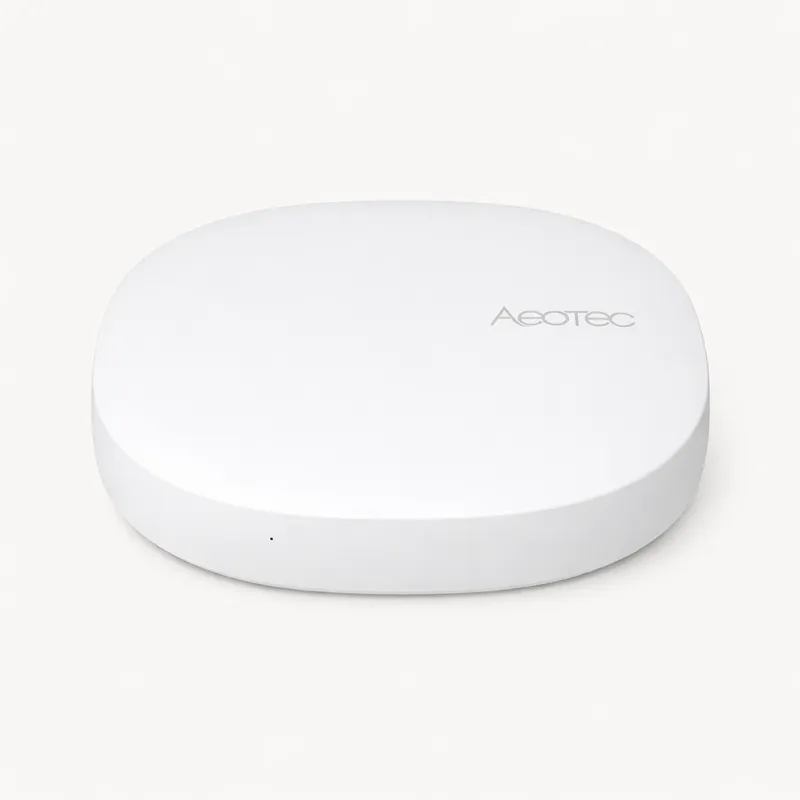
The Amazon Echo Hub is the rare smart home device that fully delivers on its promise of simplicity without sacrificing capability. Set alongside every hub in this guide, it offers the fastest path from unboxing to a working smart home — plug it in, log into your Amazon account, and your existing Alexa devices appear automatically, no additional configuration required. That frictionless first impression is not accidental; Amazon has been refining its smart home setup flow for a decade, and the Echo Hub inherits every lesson learned.
What elevates the Echo Hub above a standard Echo Show is the integrated hardware. The built-in Zigbee radio lets you add Zigbee-certified devices — Philips Hue bulbs, Aqara sensors, Yale smart locks, Sengled colour lights — without purchasing a separate Zigbee coordinator. That saves $50–$100 over building an equivalent setup through SmartThings or a dedicated Zigbee hub, and eliminates an extra box from your network closet. Thread and Matter support are built in alongside Zigbee, making the Echo Hub one of the few consumer hubs genuinely ready for the next generation of smart home devices as well as the current one.
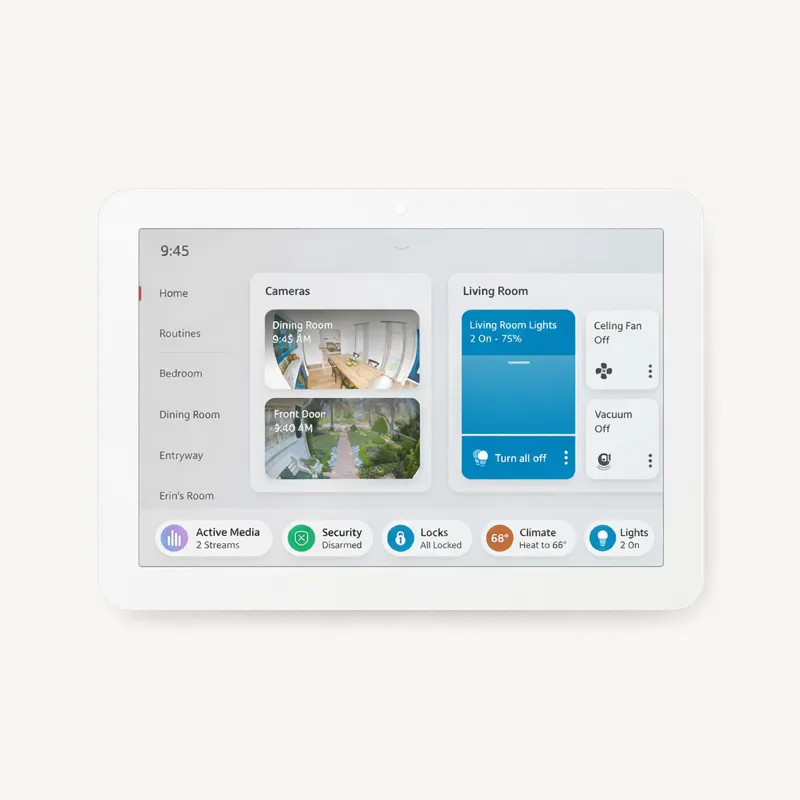
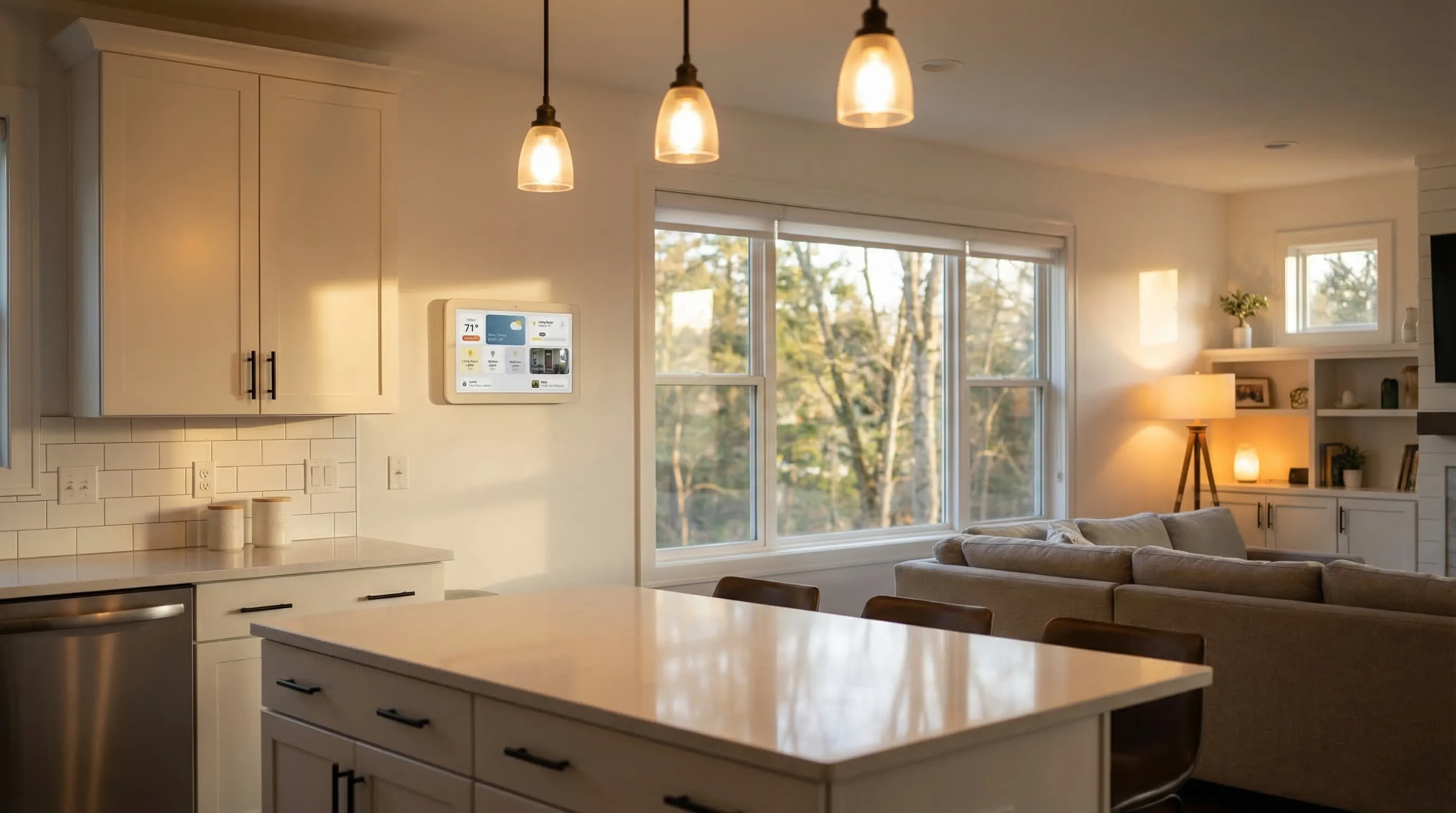
The 8-inch touchscreen is central to the Echo Hub's value proposition. Mounted on a wall using the optional magnetic bracket, it becomes a persistent visual control panel: camera feeds, thermostat status, room scenes, and ambient clock when not actively in use. Amazon's Routines interface is accessible directly on-screen and is one of the most approachable automation builders available — trigger on sunrise, motion, time, temperature, or device state, then set multiple resulting actions in sequence. For families with members who are not interested in navigating phone apps, a wall-mounted panel with large touchscreen controls meaningfully improves day-to-day usability.
Protocol coverage is strong but not comprehensive. Zigbee and Matter are solid; the Thread border router future-proofs the device for Matter-over-Thread accessories. The notable omission is Z-Wave — the protocol used by many smart locks, security sensors, and in-wall devices from brands like Schlage, Kwikset, Dome, and Zooz. If your existing or planned setup includes Z-Wave devices, you will need to run a separate hub alongside the Echo Hub, or choose SmartThings, Hubitat, or Homey Pro instead. For Alexa-centric setups built around Zigbee and Matter accessories — which describes the majority of new US smart home builds — Z-Wave is not a gap that surfaces in practice.
The automation architecture relies on cloud connectivity. Unlike Hubitat Elevation or Home Assistant, which process automations locally, the Echo Hub sends and receives commands through Amazon's servers. This means a reliable internet connection is required for reliable operation. In practice this is a background assumption for most US households, but it is worth flagging: during internet outages, locally paired Zigbee devices retain basic on/off control through the hub radio, but scheduled automations and Alexa Routines pause until connectivity returns.
Voice integration is a core strength. Alexa now handles multi-step commands, sequential device actions, and natural-language routine creation with reliability that has improved substantially over recent years. Third-party brand support is broad — the 100,000+ compatible device count reflects real certification across lighting, locks, thermostats, cameras, and appliances. The Echo Hub itself acts as an Alexa endpoint, so you can issue voice commands directly to the hub without a separate Echo speaker nearby.
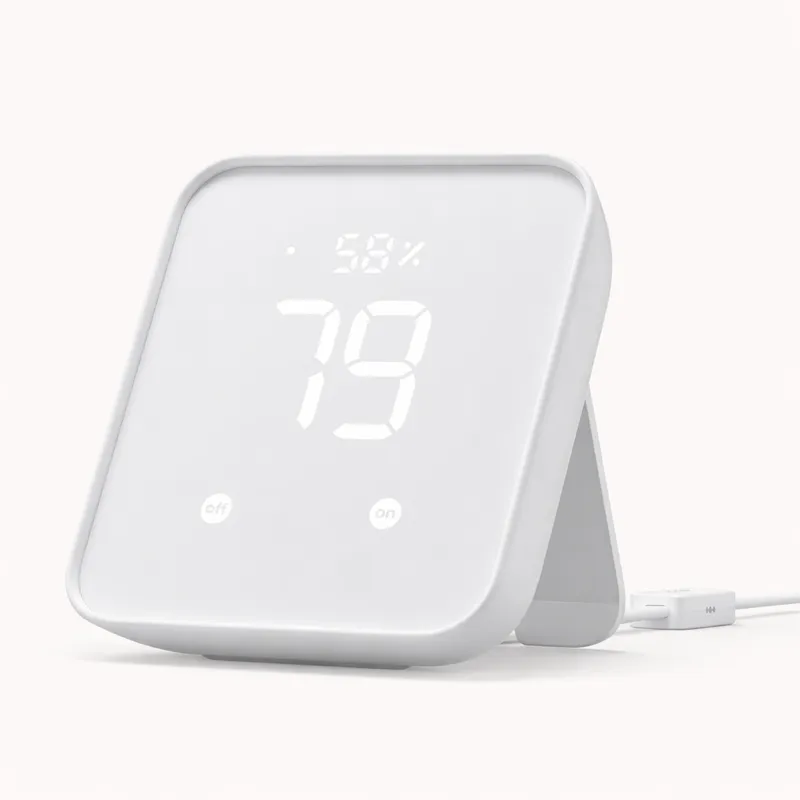
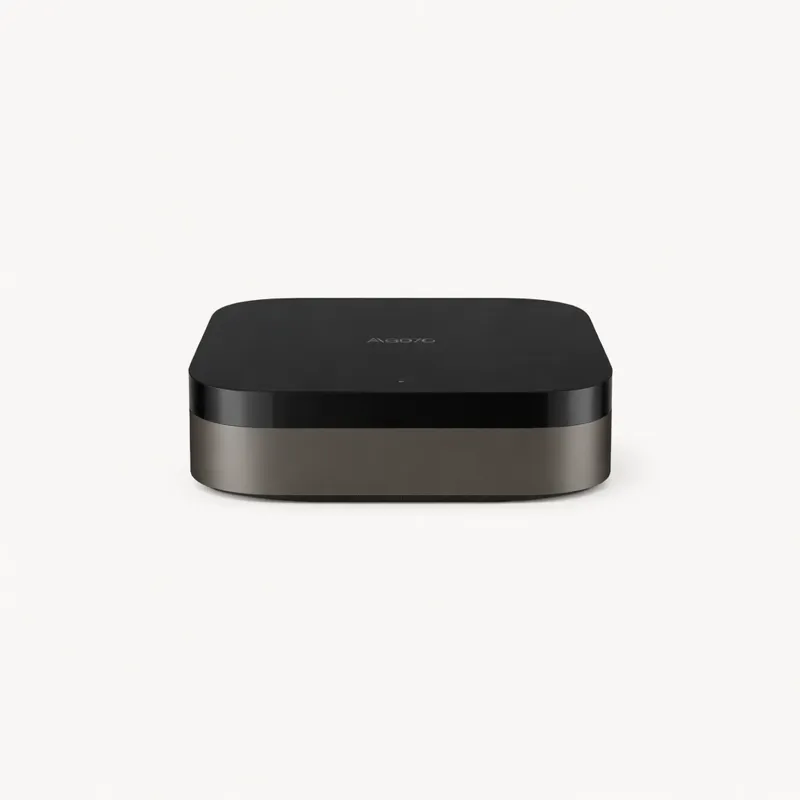
At $179.99, the Echo Hub sits at the practical midpoint of the market. It costs more than the SwitchBot Hub 2 ($69.99) and Aqara Hub M3 ($89.99), but less than the Hubitat Elevation C-8 Pro ($149.95) and Homey Pro ($399). No competing product at this price point combines an 8-inch touchscreen, Zigbee coordinator, Thread border router, and Matter controller in a single device — that hardware bundle makes the price genuinely competitive when you factor in building an equivalent setup from components.
The Echo Hub is the right answer for Alexa households wanting a wall-mounted visual control panel, newcomers who want the fastest setup experience with the broadest device compatibility, and buyers who want Zigbee and Matter without managing multiple hubs. It is the wrong answer for Google Home or Apple HomeKit households, buyers who need Z-Wave, and advanced users who prioritise local processing and deep automation control — for those use cases, Hubitat Elevation C-8 Pro or Home Assistant Green are materially stronger options.