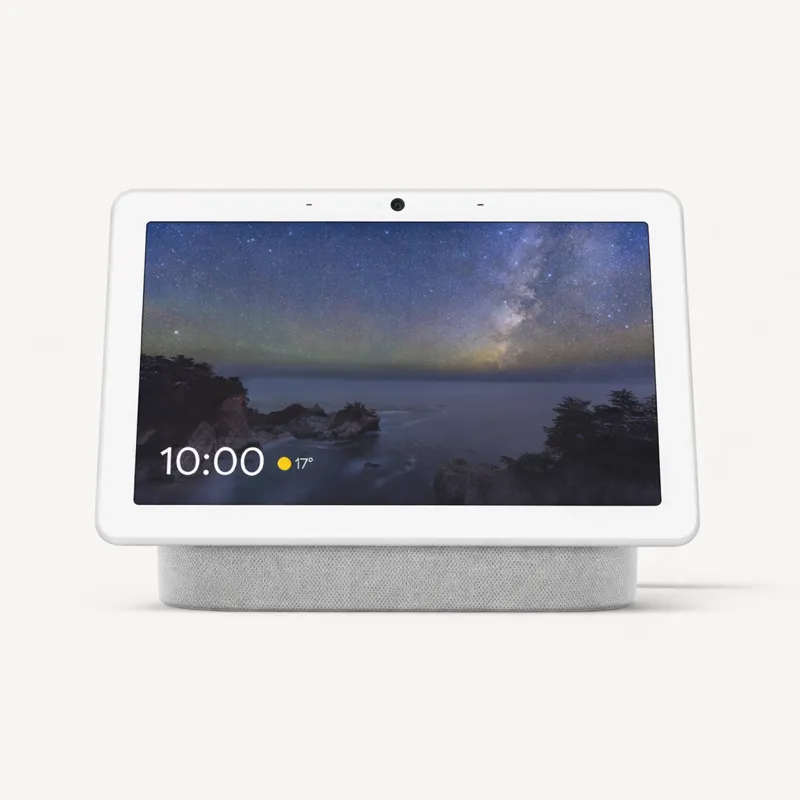
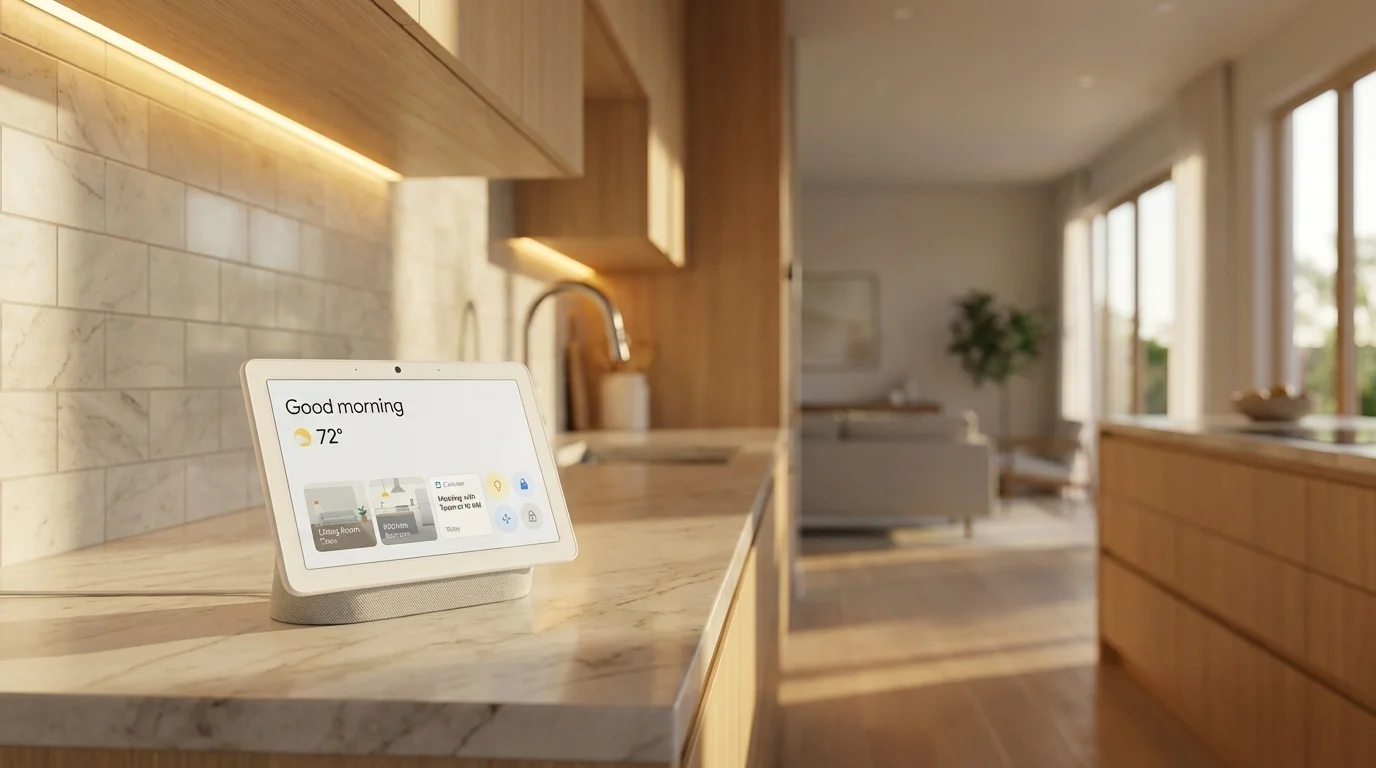
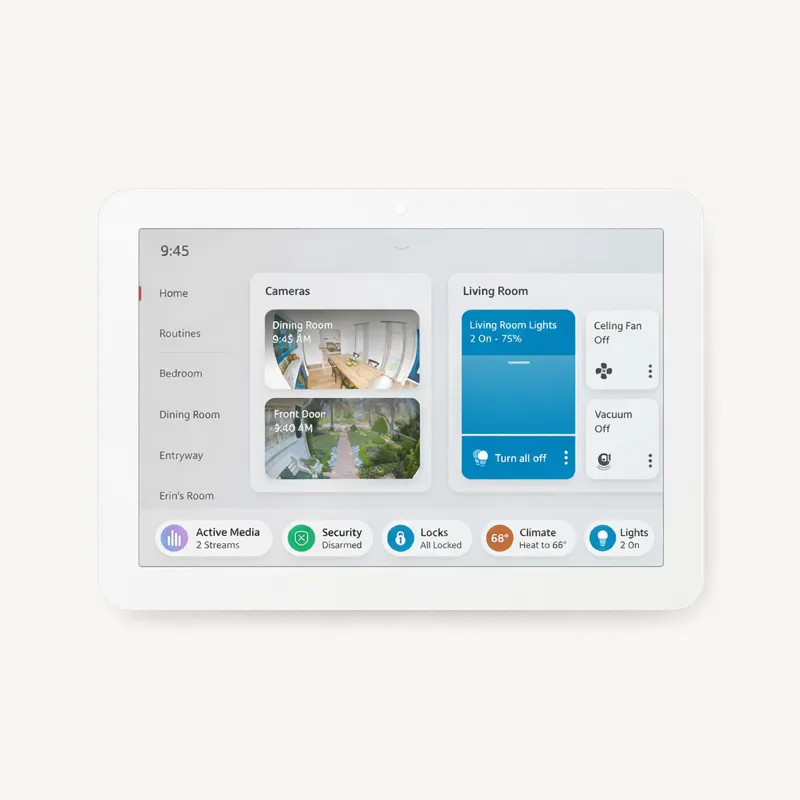
The Google Nest Hub Max is the most visually impressive hub in this guide. The 10-inch display with its face-recognition ambient mode — which automatically shows your personalised dashboard when you walk into the room — is a feature that neither Amazon nor Apple has matched, and the camera quality makes it the best video-call device in the smart home display category. For households where the hub doubles as a kitchen or living room communication panel, the Nest Hub Max is the clearest choice on display quality alone.
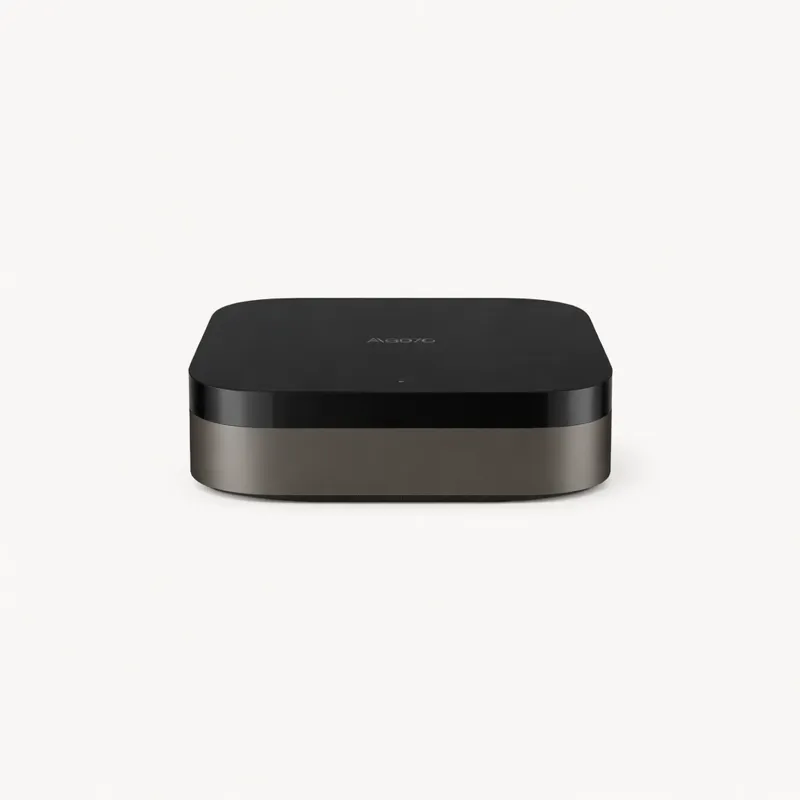
Where it stumbles is protocol breadth. The Nest Hub Max has no built-in Zigbee radio. Your entire smart home must be built around Wi-Fi and Thread/Matter devices — a workable constraint for new setups starting fresh, but a dealbreaker if you have existing Zigbee sensors, Z-Wave locks, or other legacy protocol devices. If you want to control a Zigbee bulb through the Nest Hub Max, you need a separate Zigbee bridge running alongside it — adding cost and complexity that the Echo Hub avoids at a lower price point.
The Thread border router is the most forward-looking hardware feature on the Nest Hub Max. Thread is the mesh networking protocol that Apple, Google, Amazon, and Samsung have converged on as the foundation for battery-powered Matter devices. The Nest Hub Max's Thread radio means future Matter-over-Thread accessories — sensors, locks, switches — route through the hub for local mesh networking rather than relying entirely on your home Wi-Fi. Investing in a Thread border router now is a hedge against the device ecosystem transition that is already underway.
Google Assistant integration is the Nest Hub Max's strongest operational advantage. Google's natural language processing handles smart home commands well — "turn off everything in the living room," "set the bedroom to 68 degrees when I get home," and multi-device queries all parse reliably. Google Home's Routines have improved significantly, adding conditional triggers, delayed actions, and time-based scheduling. For households using Android phones, Chromecast, and Google services throughout, the Home app's device management feels more native than competing ecosystems.
The Google Home app's history has been its main liability as a platform. The transition from the old Works with Google Home API to the newer Google Home Developer Program broke numerous third-party integrations and required extended recovery time. By 2025, the ecosystem had largely stabilised, but the episode is relevant context for anyone making a long-term infrastructure investment. The Nest Hub Max itself is a current product, but Google's hardware track record is worth considering alongside the display quality.
At $229.99, the Nest Hub Max is priced above the Echo Hub ($179.99) and considerably above the Aqara Hub M3 ($89.99). The price premium buys a better camera, a larger display, and Google's ecosystem depth. It does not buy broader protocol support — the Echo Hub's built-in Zigbee radio is a significant hardware capability the Nest Hub Max lacks at a lower price point. For Google-committed households who value the display and camera above protocol coverage, the premium is justifiable. For anyone comparing raw smart home capability per dollar, the Echo Hub wins.
The Nest Hub Max is the right answer for Google-first households who want a premium visual interface and excellent video calling, particularly as a kitchen or living room hub where the 10-inch screen and Google Assistant shine. It is the wrong answer for households with existing Zigbee or Z-Wave devices, buyers who prioritise broad protocol compatibility, and anyone for whom setup simplicity and cost-per-capability matter more than display size — where the Echo Hub wins on both dimensions.