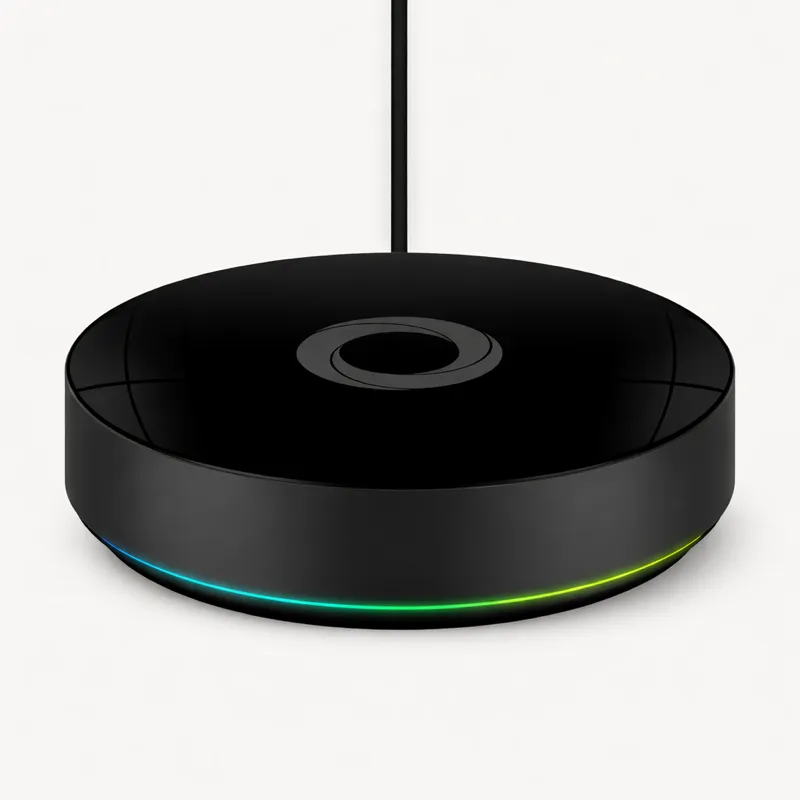
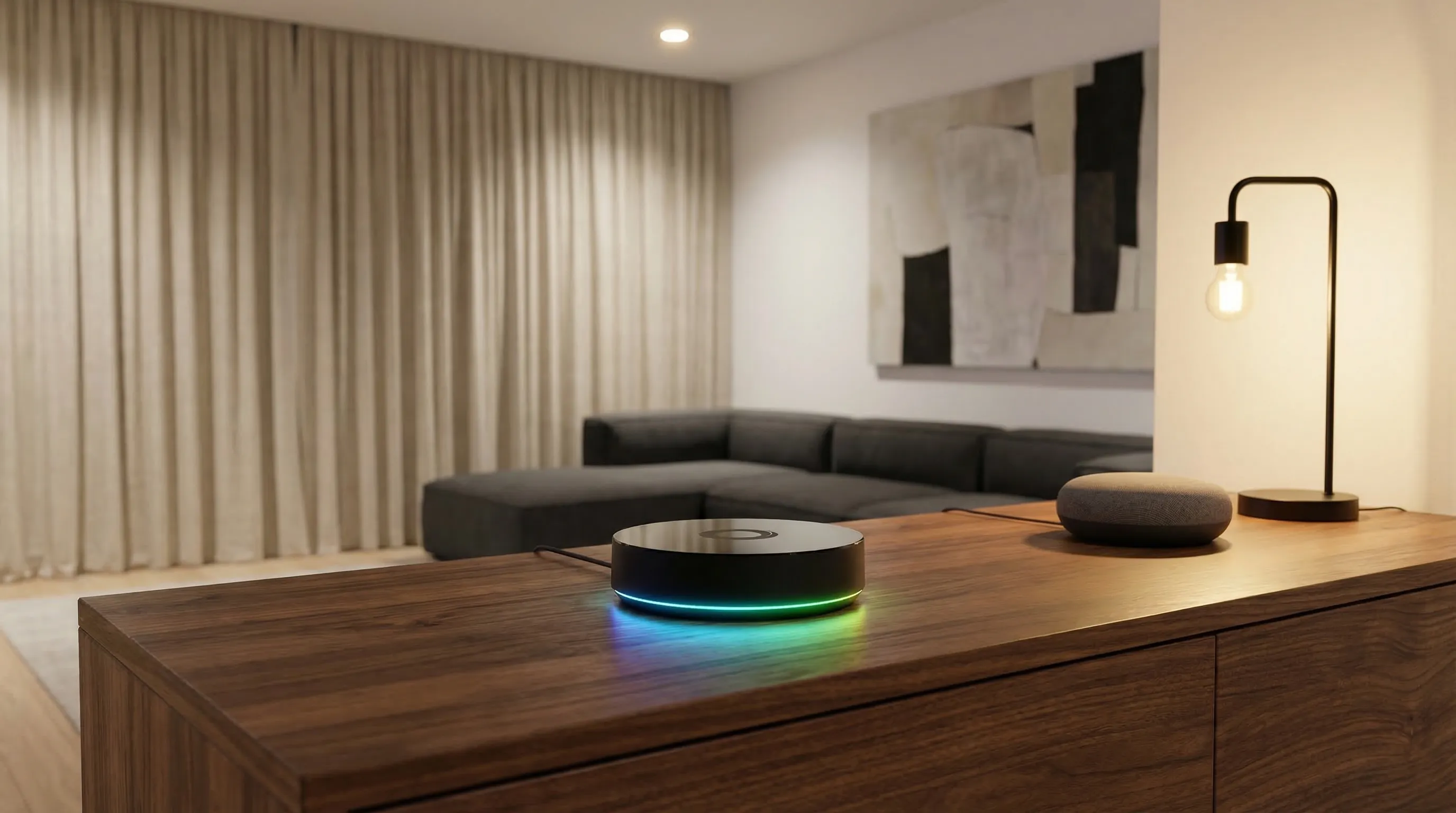
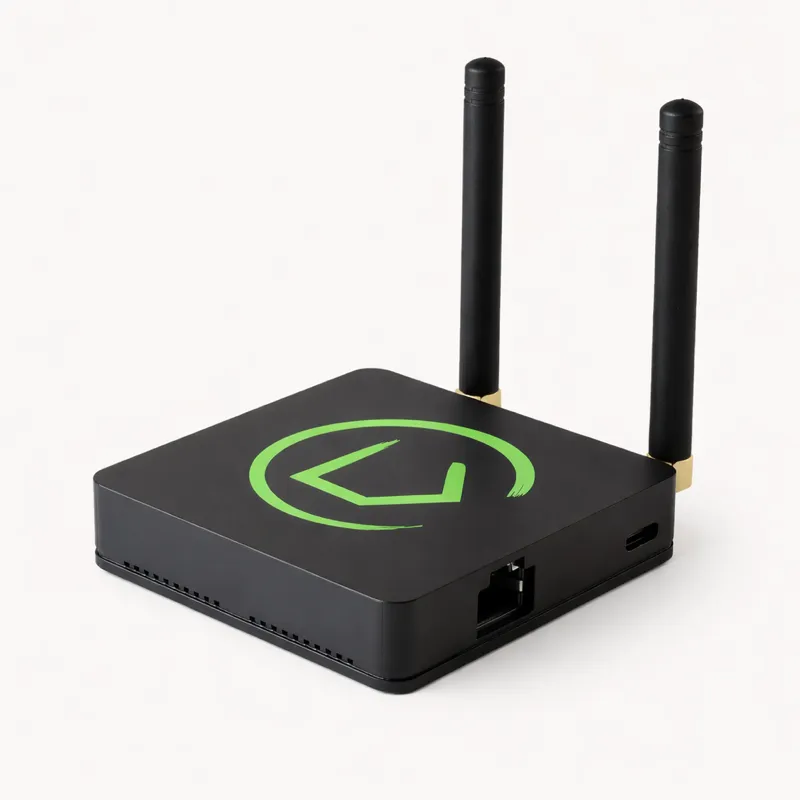
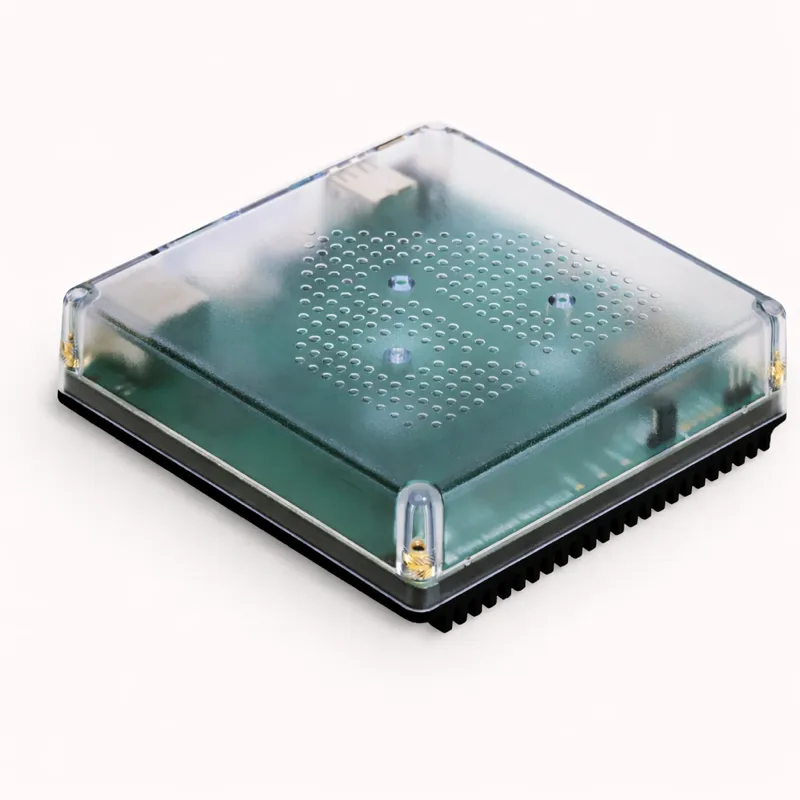
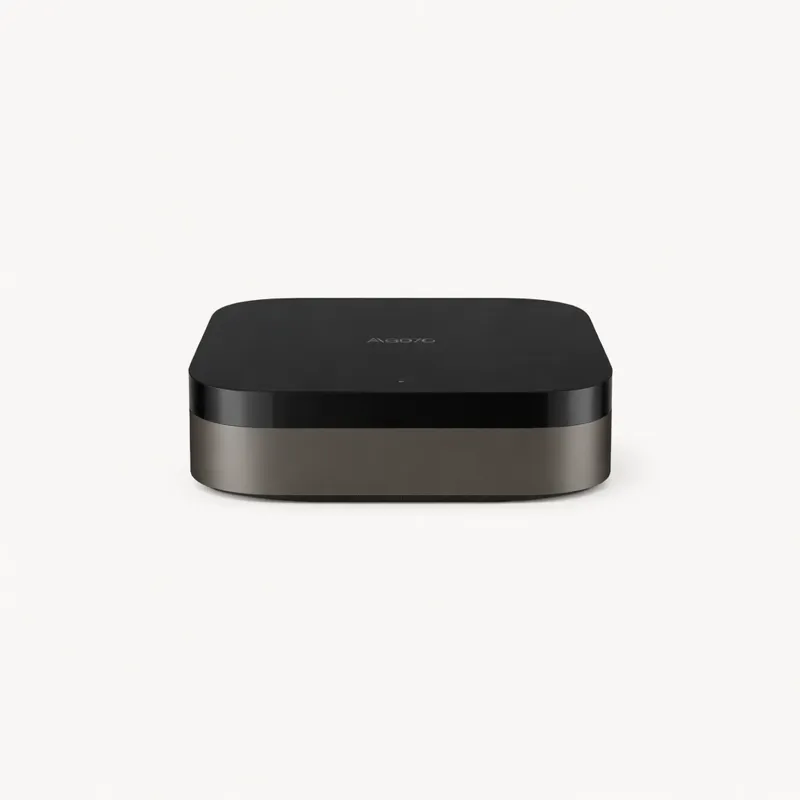
Homey Pro is what you build when you refuse to make compromises. At $399, it is the most expensive hub in this guide by a significant margin, and the only consumer smart home hub that unifies every major wireless protocol — Zigbee, Z-Wave, Thread, Matter, Infrared, and 433MHz — under one roof with fully local processing and no cloud dependency. For serious smart home enthusiasts managing 50 or more devices across multiple brands and protocols, nothing else offers this combination at any price.
The Zigbee implementation is particularly comprehensive. Unlike the Echo Hub's Zigbee radio, which operates as an Alexa-ecosystem coordinator, Homey Pro's Zigbee stack is protocol-standard, supporting virtually every Zigbee 3.0 certified device. Philips Hue bulbs, IKEA TRÅDFRI sensors, Aqara motion detectors, Sonoff plugs, and devices from dozens of other brands pair directly without needing brand-specific bridges. The Z-Wave radio adds smart locks, in-wall switches, and security sensors from Schlage, Aeon Labs, and Fibaro. IR and 433MHz add control over air conditioners, ceiling fans, and older RF devices that no other hub at this price supports natively.
The Homey app is the defining software advantage — and it is genuinely exceptional. Where SmartThings feels like enterprise IT software and the Alexa app feels like a product designed for simplicity above power, Homey strikes the balance that every smart home platform has tried and mostly failed to achieve. The flow-based automation builder is visual, logical, and powerful: create conditions, triggers, and actions in a drag-and-drop interface that makes complex multi-step automations comprehensible. The mobile app design is clean and modern, with device overview, room layout, and automation history that are genuinely useful rather than decorative. Homey's 4.6/5 app rating is the highest of any hub in this guide.
Full local processing is the architecture that separates Homey Pro from most consumer hubs. Automations execute on the device in milliseconds — no cloud round-trip, no latency, no dependency on Athom's servers. This matters both for reliability (automations continue during internet outages) and for privacy (your device state and automation patterns stay on your home network). Athom has demonstrated better-than-average commitment to long-term platform support, with regular firmware updates and a growing developer community creating apps for niche devices and services.
The device support library extends beyond the built-in radios through the Homey App Store, which lists 50,000+ devices supported through 1,000+ community and official apps. This includes not only Zigbee and Z-Wave hardware but also cloud integrations with Sonos, Spotify, Google Calendar, and Slack. You can build automations that trigger on a calendar event, adjust music volume based on room occupancy, or send a notification when the washing machine cycle ends — logic that goes well beyond device switching into genuine home intelligence.
Voice assistant compatibility is complete. Homey Pro works natively with Amazon Alexa, Google Home, and Apple HomeKit simultaneously — a combination only matched by the most protocol-agnostic hubs in this guide. For households with a mix of voice assistants, Homey Pro acts as a neutral layer that exposes all devices to all three ecosystems simultaneously. Add a device to Homey once and control it via Siri, Alexa, or Google Assistant without any additional configuration.
At $399, the Homey Pro costs more than two Echo Hubs, or an Echo Hub plus a Hubitat Elevation. The investment is justified for homes with 50+ devices across multiple protocols, for buyers who want a single hub that definitively handles every current and future protocol scenario, and for anyone who values a consumer-quality app with power-user depth. For simpler setups — a one-bedroom apartment with a dozen smart bulbs and a few sensors — it is overkill, and the SwitchBot Hub 2, Echo Hub, or Aqara Hub M3 will serve better at a fraction of the cost.
Homey Pro is the right answer for large multi-protocol smart home setups, households with IR or 433MHz legacy devices that other hubs cannot control, privacy-conscious buyers who want full local processing with a consumer-friendly app, and anyone who wants every major voice assistant supported simultaneously. It is the wrong answer for beginners, smaller setups, budget-conscious buyers, and anyone who would not get meaningful value from the six-protocol hardware stack.