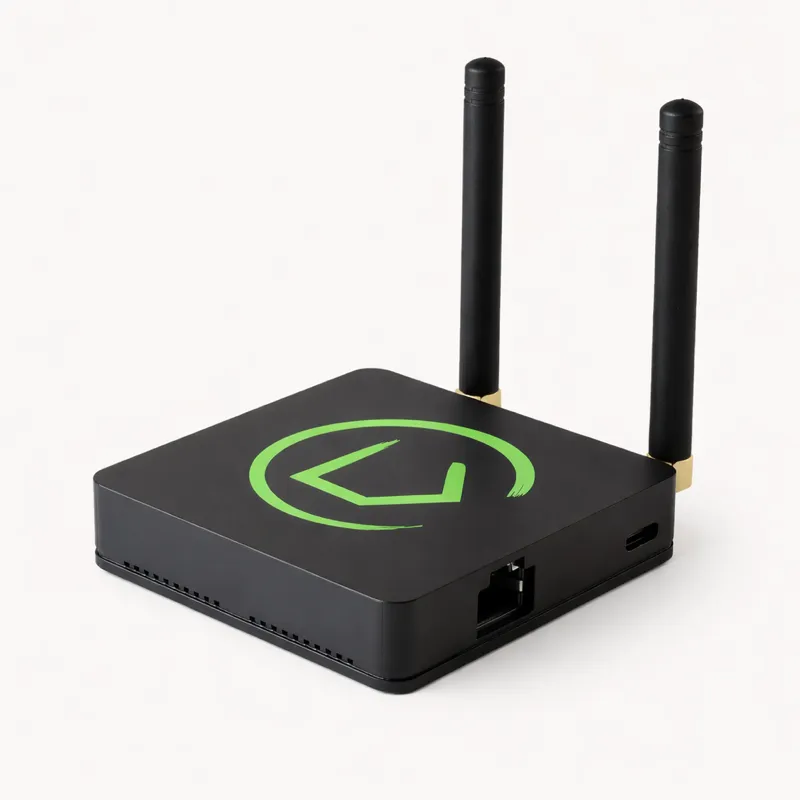
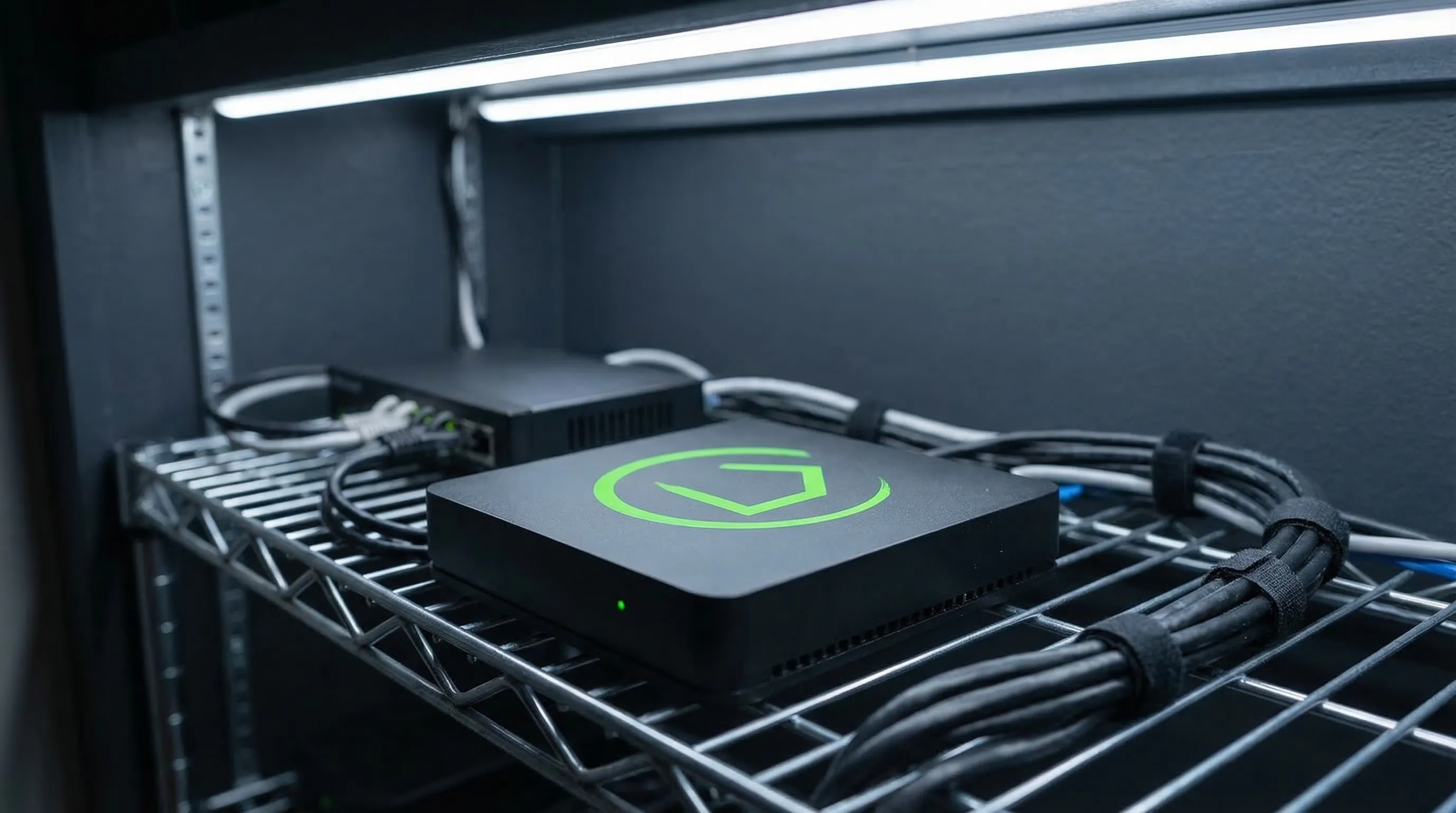
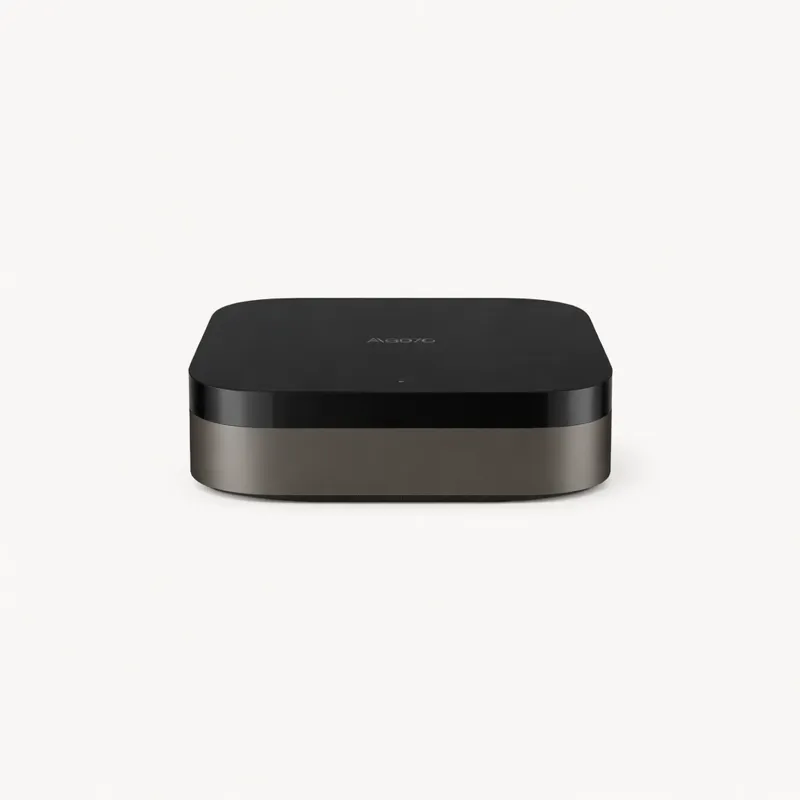
The Hubitat Elevation C-8 Pro exists for one reason: total local control. If you have ever been frustrated by a cloud-dependent hub going offline, slowing down, or being discontinued by a tech company, Hubitat is the antidote. Everything runs on the device — automations execute in milliseconds without a network round-trip, and your home keeps working through internet outages, server maintenance, and company acquisitions. No other consumer hub at this price point offers this level of operational independence.
The C-8 Pro represents a meaningful upgrade over earlier Hubitat models. Z-Wave 800 Long Range extends radio coverage substantially for large homes — with significantly improved wall penetration and extended range compared to Z-Wave 700. Matter 1.5 support brings compatibility with the latest generation of smart home devices, including direct Matter-over-Thread pairing for battery accessories when combined with an external Thread border router. Native Apple HomeKit integration — new in the C-8 Pro — means Hubitat-managed devices appear directly in the Apple Home app without requiring a separate bridge or HomeKit translation layer.
Protocol breadth is a core strength. Zigbee 3.0, Z-Wave 800, Thread, Matter, and Wi-Fi cover every major current smart home radio standard. Combined with Hubitat's device library and community driver ecosystem, virtually every major smart home brand has a working Hubitat integration: Philips Hue, IKEA, Aqara, Lutron, Leviton, Schlage, Kwikset, Ecobee, Sonos, Ring, Nest, and hundreds of others. Hubitat Package Manager — a community-built tool — provides access to hundreds of additional drivers and apps beyond the official list.
The automation architecture is where Hubitat earns its power-user reputation. Rule Machine is Hubitat's advanced automation engine — a full conditional logic system where you define triggers, conditions, required expression logic, and multiple action sequences with branching. For experienced users, this is the most flexible automation builder in a consumer hub. For newcomers, the learning curve is real and steep. Hubitat's Simple Automation Rules and Button Controllers are more approachable entry points, but the platform's depth reveals itself as you build more complex scenarios.
The web-based interface is a point of honest criticism. Hubitat's device management and dashboard look like enterprise IT tools designed in 2015. They are functional and powerful, but not visually polished. Competitors with significant consumer UX investment — the Homey app, Amazon Alexa app, Apple Home — provide a materially better visual experience. If app quality and visual design are important decision criteria, Hubitat is the wrong choice. If operational depth and privacy are what matter, the dated UI is an acceptable trade-off.
Community support is one of Hubitat's most underrated advantages. The Hubitat Community forum is one of the most active and technically capable smart home communities online. Questions get answered quickly, bugs get documented, and device drivers get written by community members with deep platform knowledge. For buyers willing to invest time in learning the platform, this community meaningfully reduces the support burden and accelerates setup for complex device configurations.
At $149.95, the Hubitat Elevation C-8 Pro is directly competitive with the Aeotec SmartThings hub ($149.99). The choice between them is essentially a choice between local-first privacy-focused automation (Hubitat) versus cloud-assisted smart home management with Samsung appliance integration (SmartThings). Hubitat also competes with Homey Pro in the advanced-user segment — at less than half the price, it offers local processing and comparable protocol support, trading Homey's superior app quality and IR/433MHz radios for significantly lower cost.
The C-8 Pro is the right answer for privacy-conscious buyers who want fully local automation, technically capable users willing to invest time in a demanding platform, homes with Z-Wave 800 Long Range devices that benefit from extended radio coverage, and anyone who wants their smart home infrastructure to function completely independently of any company's servers. It is the wrong answer for newcomers seeking an accessible first hub, households that prioritise visual app quality, and anyone not comfortable with web UIs and configuration work. For those buyers, the Echo Hub or Aqara Hub M3 are substantially more approachable.