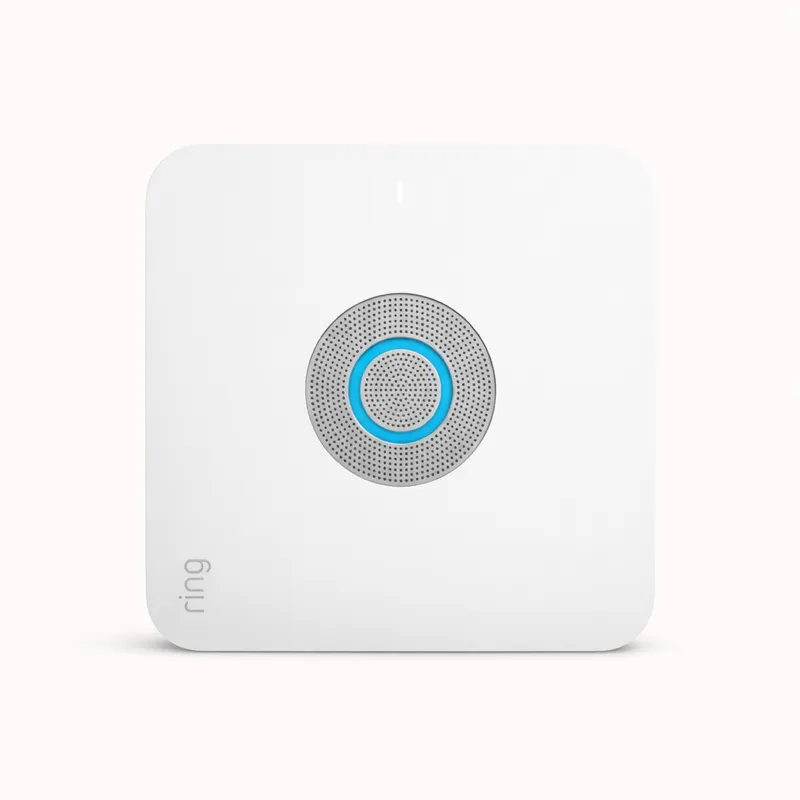
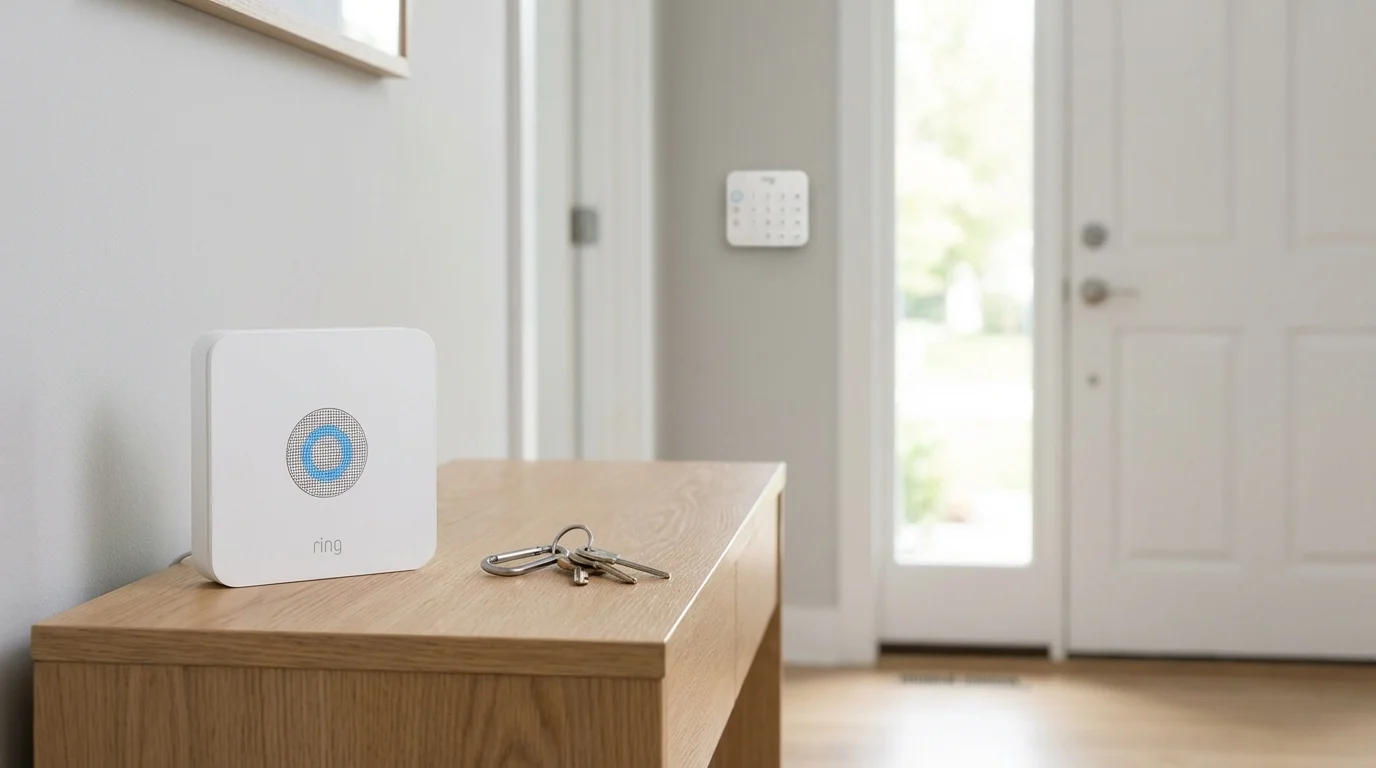
The Ring Alarm Pro Base Station is Amazon's flagship home security hub — a device that doubles as a full eero Wi-Fi 6 mesh router while managing your Ring security system. The two-in-one premise is genuinely appealing: replacing your existing router with security-hub functionality eliminates a box from your network, potentially simplifies your home topology, and keeps your security system on the same mesh infrastructure as your connected devices. In concept, it is elegant. In practice, the mandatory subscription requirements change the value proposition significantly compared to alternatives.
The eero Wi-Fi 6 router integration is the hardware feature that makes the Ring Alarm Pro distinct from the standard Ring Alarm Base Station. Rather than a security hub that connects to your existing network, the Pro is the network — providing Wi-Fi 6 coverage from the base station itself, with optional eero extenders for larger homes. For apartments and smaller homes where eliminating a separate router simplifies the setup, this is a genuine benefit. For homes with an existing mesh network investment, the built-in router is largely redundant, which changes the value calculation considerably.
The Z-Wave radio supports third-party smart home devices beyond Ring's proprietary sensor lineup. Z-Wave locks from Schlage, Kwikset, and Yale can be integrated through the Ring app, as can Z-Wave sensors and smart plugs from compatible brands. This Z-Wave capability meaningfully extends the Ring Alarm Pro beyond a closed Ring ecosystem, allowing you to use arm/disarm status to trigger Z-Wave lock actions or smart plug controls. The integration is not as deep as SmartThings or Hubitat, but it is functional for common use cases.
The cellular backup available through Ring Protect Plus is a genuine resilience advantage. When your internet connection goes down — during a storm, a router failure, or a deliberate infrastructure disruption — the Ring Alarm Pro's cellular fallback maintains communication with Ring's monitoring centre. For a home security application where connectivity during emergencies is critical, cellular backup provides meaningful protection. Ring Protect Plus costs $19.99 per month and includes professional 24/7 monitoring; the cellular backup is bundled with this tier.
The subscription model is the defining constraint for most buyers. Since March 2023, all new Ring Alarm purchases require at minimum a Ring Protect Basic subscription at $3.99 per month for app-based arm/disarm, real-time push notifications, and remote system access. Without any subscription, the system functions only through keypad control — a significant limitation for modern security expectations. For buyers accustomed to subscription-free home automation from Hubitat, Home Assistant, or SimpliSafe, this mandatory fee structure represents a fundamental shift in what you are purchasing.
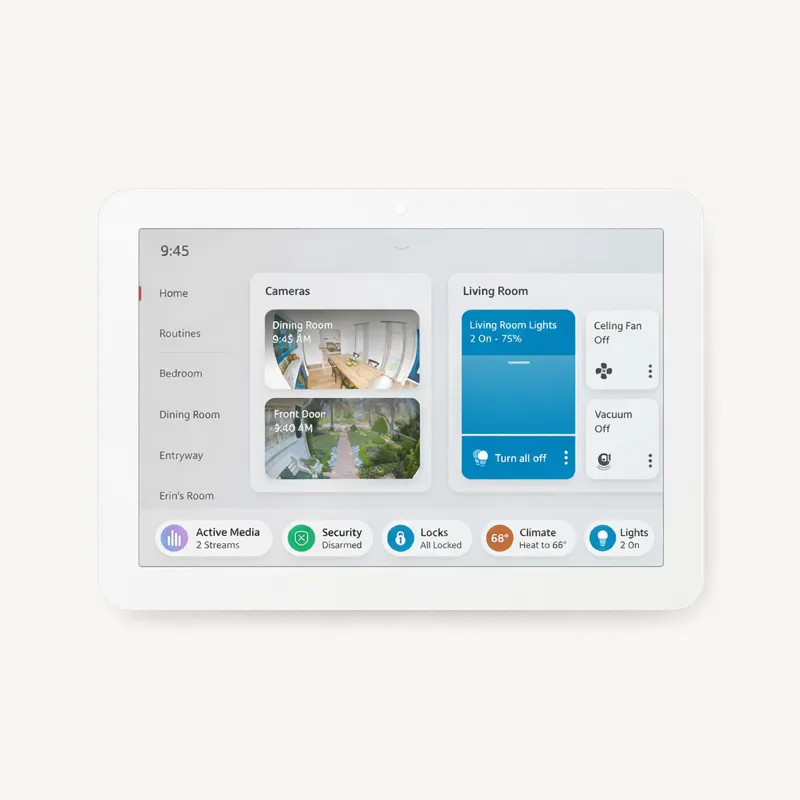
Alexa integration is the Ring Alarm Pro's strongest ecosystem advantage. Ring is an Amazon subsidiary, and the integration is the deepest available — arm, disarm, check status, trigger routines on alarm events, and access Ring camera feeds all function seamlessly within the Amazon ecosystem. For Alexa-first households with Ring cameras already installed, the Alarm Pro extends a familiar platform rather than introducing a new one. Google Home integration supports basic arm and disarm via voice but is more limited in scope. Apple HomeKit is not supported.
The absence of Matter certification is worth noting in the 2026 smart home context. As more devices adopt Matter as a cross-platform standard, Ring's position becomes increasingly isolated from the broader ecosystem. The Ring Alarm Pro cannot serve as a Matter controller, cannot bridge Ring devices to HomeKit, and does not interoperate with the expanding Matter device universe. For households committed to Amazon/Ring, this is a non-issue. For households considering future platform flexibility, it is a meaningful restriction.
At $249.99, the Ring Alarm Pro is priced at the premium end of the dedicated security hub category. SimpliSafe's base station at $129.99 provides subscription-optional security, local alarm functionality, and clean DIY installation at nearly half the price. The Ring Alarm Pro's hardware justification — the built-in eero Wi-Fi 6 router — only makes financial sense if you genuinely need a new router alongside your security system.
The Ring Alarm Pro is the right answer for Amazon/Ring households that want a combined security hub and mesh Wi-Fi upgrade, buyers with Z-Wave locks who want Ring integration, and homes where eero networking provides a genuine Wi-Fi improvement over the existing setup. It is the wrong answer for households that want subscription-free security control, users who need Apple HomeKit or Matter compatibility, and anyone who already has a capable mesh network and would be paying $250 primarily for security functionality.